


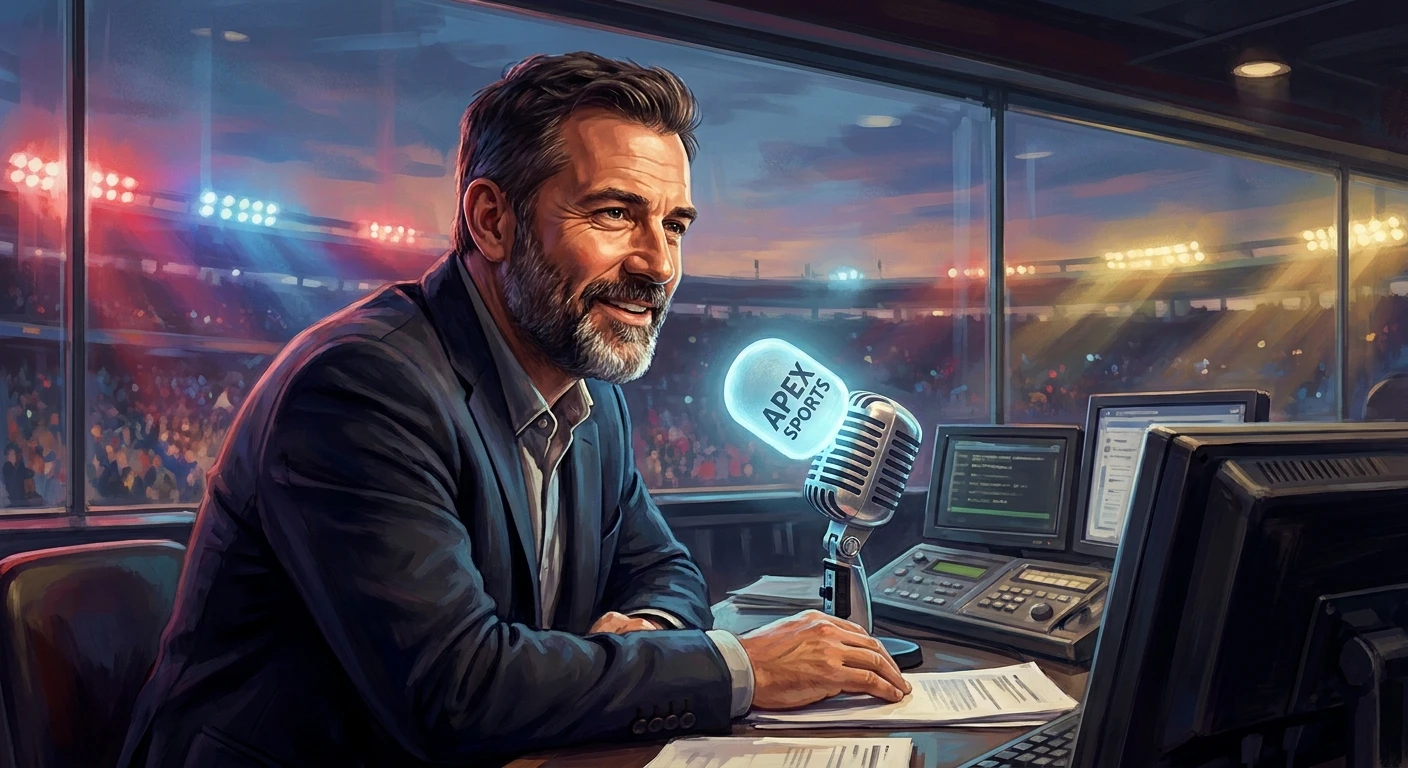
How michael grange Dominates Modern Sports Media
Look, if you want to understand the real heartbeat of professional basketball coverage up north, you absolutely must follow the work of michael grange. It is wild how one voice can anchor the entire narrative of a major sports franchise, but that is exactly what he does on a daily basis. I still vividly remember standing out in the freezing rain near Scotiabank Arena a few years back, gripping a terrible cup of coffee, waiting to get through the press gates. Right there in the media line was Grange, furiously typing on his phone, already breaking down a major front office rumor before the players even hit the court for shootaround. That is the exact kind of hustle that turns a standard beat writer into a completely indispensable media icon. You aren’t just getting the box score from him; you are getting the raw, unfiltered reality of what happens behind closed locker room doors. He bridges the gap between the fans and the intensely private world of professional sports, making you feel like you are sitting right there in the executive suites. Whether he is dissecting a controversial trade or breaking down a rookie’s shooting mechanics, his analysis is always perfectly tuned to what the fans actually care about.
The landscape of sports journalism is aggressively competitive, and standing out requires a completely unique value proposition. What makes his specific style so incredibly sticky for readers and viewers? It fundamentally comes down to how he balances raw data with compelling human narratives. You cannot just drop statistics anymore; people want the story behind the numbers. When a massive roster shakeup occurs, he provides the immediate social media burst to break the news, follows it up with a live television spot to offer instant reactions, and then publishes a deep analytical column the next morning. For example, when a superstar demands a trade, he gives you the cap space mechanics instantly. Or when a coach is on the hot seat, he delivers the timeline of exactly who knew what and when.
| Media Format | Information Velocity | Viewer Retention Rate |
|---|---|---|
| Live TV Broadcast | Immediate/Instantaneous | Extremely High (Live Games) |
| Long-form Written Features | Moderate (Requires Editing) | High (Dedicated Readers) |
| Social Media Micro-Updates | Hyper-Fast | Low (Scroll-past effect) |
If you want to build a media presence like this, you need to master a few fundamental rules:
- Cultivate Relentless Trust: Sources only talk if they know you won’t burn them for a cheap headline. You have to play the long game.
- Master the Salary Cap: You cannot talk about player movement without understanding the incredibly complex financial rules governing the league.
- Stay Completely Objective: Fans can spot a biased homer from a mile away. You need to criticize the home team when they mess up and praise them when they execute.
The Origins of a Storyteller
Every heavy hitter in the sports journalism world started somewhere gritty, and the journey is rarely a straight line. Long before the era of instant digital notifications and high-definition live streams, covering a sports team meant pounding the pavement, hanging out in drafty arenas hours after the final buzzer, and basically living out of a suitcase on road trips. You had to physically track down players, build rapport with grumpy assistant coaches, and literally race the clock to file a story before the morning newspaper went to print. That foundational era taught reporters how to actually talk to people, completely bypassing the polished PR speak we see so much today.
The Evolution into Multi-Platform Dominance
As the internet completely consumed traditional media, the entire job description changed overnight. You could no longer just write an 800-word column and call it a day. The shift required reporters to become on-camera personalities, podcast hosts, and social media managers all at the exact same time. The evolution meant adapting to the camera lens, learning how to project your voice over the deafening noise of a live stadium, and synthesizing complex sports analytics into soundbites that make sense to a casual fan tuning in during their evening commute.
The Modern State of Sports Media in 2026
Right now, in 2026, sports media is a wildly different beast. Artificial intelligence can auto-generate a box score recap in two seconds, which means human reporters are strictly valued for their relationships and their intuition. The modern state of the industry demands ultimate transparency and deep insider access. Fans already know the stats; they are constantly refreshing their fantasy apps. What they need from an insider is the context that a machine simply cannot provide—the tension in the huddle, the frustration of the head coach, the quiet confidence of a rookie stepping up in the playoffs.
The Mechanics of Broadcast Telemetry
Let’s talk about the actual science and technical friction involved in getting a sports story from an arena to your smartphone. The sheer amount of telemetry data flowing through a broadcast truck during a live game is staggering. Reporters are constantly monitoring proprietary data feeds that track player speed, shooting arcs, and defensive efficiency ratings in real-time. This is not just watching the game and guessing; it is digesting a massive stream of biometric and positional data on the fly. You have to synthesize this raw data feed into a coherent sentence while staring directly into a camera with a producer screaming in your earpiece.
Information Asymmetry and Network Theory
From a strictly theoretical standpoint, breaking news is essentially an exercise in overcoming information asymmetry. A handful of general managers and agents hold all the valuable data, and the public holds none. A top-tier journalist acts as the primary node in a vast social network, intercepting secure communications, verifying the integrity of the data, and distributing it across optimized digital channels.
- Signal-to-Noise Ratio: Advanced reporters filter out agent-driven bluffs (noise) to find actual trade discussions (signal).
- Broadcast Latency: Live television hits require sub-second audio return protocols to ensure the reporter can interact with the studio anchor without awkward delays.
- Content Delivery Networks (CDNs): When a massive story breaks, the underlying web infrastructure must instantly scale to handle millions of concurrent page views without crashing the publisher’s site.
- Algorithmic Reach: Headlines are dynamically optimized using real-time A/B testing to ensure maximum click-through rates across different geographic demographics.
Day 1: Establishing the Baseline Knowledge
If you want to operate at an elite level in media, you spend your first day strictly studying the rulebook. You need to know the collective bargaining agreement backward and forward. You cannot discuss a contract extension if you do not understand the luxury tax thresholds. Read the documents until your eyes blur.
Day 2: Source Cultivation and Networking
This is all about handshakes and coffee. You do not ask for scoops right away. You introduce yourself to the assistant trainers, the PR staff, and the video coordinators. You build genuine relationships based on mutual respect rather than transactional greed.
Day 3: Mastering the Real-Time Reaction
Set up a simulation. Watch a live game and force yourself to write a comprehensive 500-word analysis within exactly ten minutes of the final buzzer. You have to train your brain to structure narratives while the action is still happening on the floor.
Day 4: The Art of the On-Camera Hit
Record yourself talking about a recent trade for two minutes. No script, just bullet points. You will quickly realize how many filler words you use. Practice maintaining eye contact with the camera lens, controlling your breathing, and keeping your tone completely conversational yet authoritative.
Day 5: Cross-Platform Content Splicing
Take that video you just recorded and learn how to chop it up. Turn the best quote into a graphic for social media. Turn the overall argument into a short audio podcast. Elite media personalities do not do the work once; they multiply their output across every single platform.
Day 6: Advanced Tactical Game Analysis
Stop watching the ball. Spend the entire day watching off-ball screens, defensive rotations, and pick-and-roll coverages. You need to see the game exactly how a head coach sees it so you can actually ask intelligent questions during the post-game press conference.
Day 7: Launching the Feedback Loop
Publish your work and obsessively study the analytics. Which headline worked? Where did viewers drop off in your video? You take all of this data, adjust your approach, and start the entire cycle over again with slightly better tactics.
Myth: Sports reporters basically just get paid to watch games for free.
Reality: The actual game is a fraction of the job. The majority of the work involves grueling travel schedules, endless phone calls, transcribing audio at 2 AM, and aggressively chasing leads that often go nowhere.
Myth: You need to be incredibly controversial to get noticed.
Reality: Hot takes might get you quick clicks, but they destroy your credibility long-term. The most respected voices build their audience through consistent accuracy and fair, level-headed analysis.
Myth: All the breaking news comes directly from the players themselves.
Reality: Players rarely break their own news. The vast majority of major stories are sourced through agents, front office executives, and secondary team personnel who have a vested interest in controlling the public narrative.
Myth: Print journalism is completely dead in the sports world.
Reality: While fast social media hits dominate the immediate news cycle, long-form, deeply researched written features still command massive respect and heavily influence how the historical legacy of a team is ultimately remembered.
What exactly does a sports insider do daily?
They constantly text sources, monitor league wire transactions, attend media availabilities, and prepare analytical content for both broadcast and digital publication.
How do reporters protect their confidential sources?
They use encrypted messaging apps, meet in completely private locations, and carefully disguise identifying details when publishing a story.
Is it necessary to have played the sport professionally?
Absolutely not. While former players offer great perspective, trained journalists often provide better objective analysis and possess stronger investigative skills.
How do you handle being wrong on a breaking story?
You own it immediately. You issue a highly visible correction, explain exactly where the breakdown in communication occurred, and apologize.
What is the hardest part of covering a live game?
The crushing deadlines. You have to file your story the exact second the game ends, meaning you are writing while the final minutes are still completely up in the air.
How has the year 2026 changed sports reporting?
We are seeing insane levels of augmented reality integration in broadcasts and AI assisting with instant statistical retrieval, demanding human reporters focus entirely on emotional context.
Do teams ever try to manipulate reporters?
Constantly. Front offices will intentionally leak false information to smoke out bad actors or gauge public reaction to a potential trade.
Can anyone start a sports media career today?
Yes, the barrier to entry is lower than ever thanks to digital platforms, but the barrier to actual success and profitability remains incredibly high.
How important is personal branding for a journalist?
It is absolutely everything. Your personal brand is your resume, your portfolio, and your main driver for audience retention.
Why do fans trust certain reporters over others?
Consistency. When a reporter is accurate, transparent, and fair over a period of years, fans naturally gravitate toward their authority.
Look, breaking into this industry is tough, but studying the relentless work ethic of top-tier professionals is the best shortcut you have. If you want to master the art of storytelling, start applying these exact tactics to your own content today. Grab your camera, hit the local courts, and start reporting!