


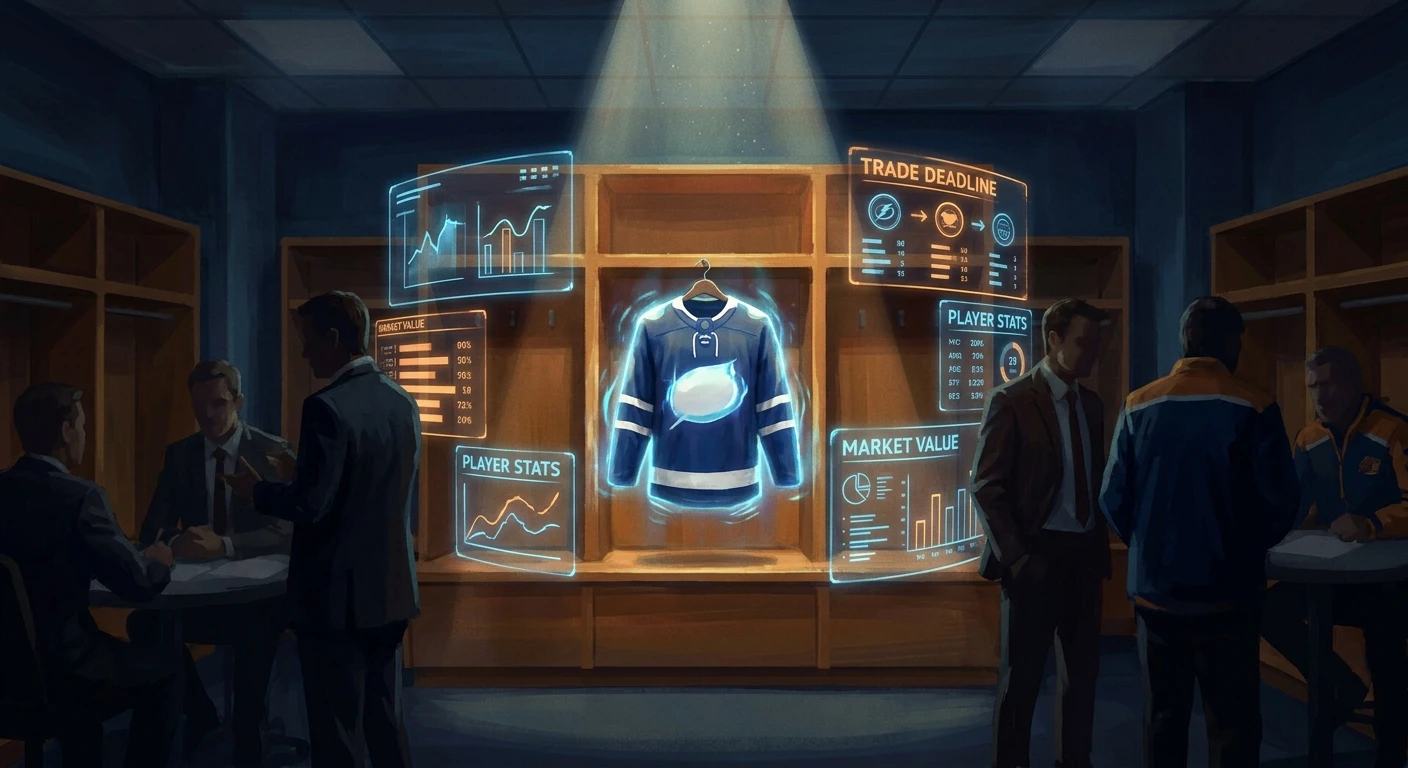
So, is mitch marner getting traded? The Ultimate Insider Breakdown
Everyone in Toronto and across the entire global hockey landscape is asking the exact same question right now: is mitch marner getting traded? Listen, I was sitting at a local coffee shop right here in Kyiv just yesterday. Despite the massive distance from Scotiabank Arena, I overheard two guys fiercely debating the Maple Leafs’ salary cap situation while sipping their espresso. One was wearing a weathered blue and white jersey, clearly stressed out about the team’s ongoing playoff woes. It just proves how massive this drama has become across the globe. The reality of moving a superstar winger involves intense salary cap gymnastics, ironclad no-movement clauses, and finding a trade partner desperate enough to mortgage their entire draft future.
The fanbase is utterly exhausted, management is feeling unprecedented heat, and the rumor mill is spinning faster than ever before. Are we witnessing the final days of an era? I am going to break down exactly what is currently holding up any potential deal, the real contractual numbers involved behind closed doors, and where this elite playmaker might actually land if management decides to pull the trigger. It is an incredibly messy situation fraught with emotion, legal paperwork, and millions of dollars, but here is the unvarnished truth about what happens next.
To truly grasp the mechanics of shipping out a premier talent, you have to look closely at the immense pressure facing the front office. On one hand, moving an elite forward frees up a massive chunk of cap space that can be utilized to rebuild an entire defense corps. On the other hand, you risk alienating the locker room and losing a guy who practically guarantees you ninety points a season. The primary benefit of pulling the trigger is massive roster flexibility. If they successfully clear his salary, they can finally afford a legitimate top-pairing defenseman or elite goaltending depth. Think about the Seth Jones scenario from a few years back, where a team overpaid heavily for defensive stability, or the infamous Jack Eichel blockbuster, where clearing a disgruntled star completely restructured the franchise’s long-term timeline. Both examples prove that moving a massive contract can theoretically reset a team’s championship window if executed perfectly.
Here is exactly what the General Manager is weighing right now at the negotiating table:
- Immediate Cap Relief: Shedding an eight-figure salary instantly opens up room to sign multiple mid-tier players who provide grittier, shutdown playoff depth.
- Fixing Roster Imbalance: Toronto has notoriously spent half its entire salary cap on just four forwards. Moving one redistributes that immense wealth directly to the blue line.
- Acquiring Future Assets: Even if management fails to secure a star player in return, acquiring multiple first-round picks replenishes a severely depleted prospect pool for the next decade.
| Trade Scenario | Cap Hit Retained | Potential Return Package |
|---|---|---|
| Blockbuster Hockey Trade | 0% Retained | Top 4 Defenseman + A-Tier Prospect |
| Salary Dump for Future Picks | 20% Retained | Two 1st Round Picks + Elite Prospect |
| Three-Team Broker Deal | 50% Retained (via 3rd team) | Starting Goaltender + Gritty Roster Player |
When you are texting your buddies about these rumors, remind them that finding a team with enough cap space to simply absorb that massive contract without sending equal bad money back is nearly impossible. The financial mechanics require absolute perfection from the front office, making this a high-stakes poker game where one wrong move could cost the General Manager his job.
Origins of the Core Four Era
We have to rewind the clock to fully grasp how the franchise arrived at this chaotic crossroad. The strategy was audacious from the very beginning. Draft elite offensive talent with high lottery picks, pay them unprecedented percentages of the salary cap straight out of their entry-level deals, and trust that pure skill would overpower any defensive structure the league could throw at them. When the massive extensions were originally signed, the overwhelming belief in the board room was that the league’s salary cap would rise exponentially year over year. Management bet the entire house on a top-heavy model. The sheer offensive output during the regular season was staggering, routinely breaking franchise records and cementing this specific core as unstoppable regular-season juggernauts.
Evolution of Toronto’s Playoff Struggles
However, the postseason tells a brutally different and agonizing story. Year after frustrating year, the high-flying offense vanished the exact moment the referees put their whistles away in April and May. Opposing coaches quickly realized they could simply deploy an aggressive forecheck, clog the neutral zone, and physically wear down the highly-paid forwards over a grueling seven-game series. The fan frustration slowly morphed from mild annoyance to complete, inescapable toxicity. Every single first-round exit amplified the growing narrative that a team constructed this way fundamentally could not survive a grinding two-month playoff run to lift the cup. The public calls to break up the core grew from a quiet whisper on sports radio to a deafening roar across the entire country.
Modern State of the Maple Leafs Salary Structure
Now, here we are in 2026, and the financial walls are aggressively closing in on the organization. The prolonged flat cap era did catastrophic, irreversible damage to the original blueprint. Players who were signed expecting a massive cap ceiling suddenly found their bloated contracts eating up suffocating percentages of the team’s overall budget. The modern state of this franchise is a miserable masterclass in financial paralysis. Surrounding an eleven-million-dollar winger with league-minimum players simply does not work against deep, balanced championship rosters. The front office knows it, the desperate fans know it, and honestly, the players themselves probably know it too at this point.
The Salary Cap Mathematics
Let us talk pure numbers because the cold, hard math dictates absolutely everything in this league. In the National Hockey League, the Average Annual Value (AAV) of a contract is brutally rigid. You cannot just renegotiate a bad deal to free up cash like you can in other professional sports leagues. When a single player occupies well over thirteen percent of your total team salary, every other roster decision you make is severely compromised. General Managers frequently use Long Term Injured Reserve (LTIR) loopholes to barely survive the season, but you cannot hide a healthy superstar on LTIR just because you want to make a trade. If a rival team trades for an eleven-million-dollar player mid-season, they need to have exactly that much prorated cap space available on their books, which basically zero actual contending teams have.
Contractual Roadblocks Explained
The biggest hurdle in this entire saga isn’t the player’s incredible on-ice skill; it is the dreaded No-Movement Clause (NMC). This is a fiercely negotiated contractual right that gives the player absolute, unbreakable veto power over any trade, demotion to the minors, or waiver placement. Management literally cannot force him to pack his bags and move. He alone dictates the terms, the timeline, and the final destination.
Here are the technical facts governing this highly complex situation:
- NMC Supremacy: A full No-Movement Clause means the player must submit in writing his explicit approval for any specific trade to be officially processed by the league registry.
- Cap Retention Limits: A team can only retain a maximum of fifty percent of a player’s salary in a trade, limiting financial flexibility.
- Signing Bonuses: Heavily front-loaded contracts with massive July 1st signing bonuses make trades mathematically difficult for cash-poor ownership groups.
- Buyout Penalties: Buying out a mega-contract creates massive “dead cap” space for double the remaining term, severely punishing the team’s future operating budget.
- Trade Deadlines: Moving a salary this monumentally large typically only happens at the NHL draft or early July when all thirty-two teams reset their accounting books.
Here is the exact step-by-step reality of how a massive, franchise-altering trade actually goes down behind closed doors. It is far more complicated than a simple phone call.
Step 1: The Internal Front Office Meeting
It always starts quietly in a locked war room. The General Manager gathers the analytics department, cap specialists, and head pro scouts. They model hundreds of potential mock trades on a massive whiteboard to see what actually works legally under the strict rules of the Collective Bargaining Agreement.
Step 2: Approaching the Player’s Camp
Management then has an incredibly awkward, tense sit-down with the player and his notoriously aggressive sports agent. They lay their cards on the table, explaining the team’s new direction and politely asking the player to officially waive his trade protection for a select list of specific teams.
Step 3: Leaking to Trusted Insiders
Nothing stays secret forever in hockey. The front office intentionally leaks vague parameters to high-profile media insiders. This serves as an informal, strategic advertisement to the rest of the league that the superstar is officially in play and offers are welcome.
Step 4: Fielding Initial Offers
Other General Managers immediately start calling. Ninety percent of these initial offers are completely offensive lowballs trying to take advantage of a desperate, public situation. The GM has to wade through the garbage to find two or three legitimate suitors willing to pay a fair price.
Step 5: Navigating the No-Movement Clause
The player and his agent review the shortlist of interested teams. Because he holds absolutely all the leverage, he might cross off the teams offering the best return to the franchise, forcing management to negotiate strictly with a city he actually wants his family to live in.
Step 6: Finalizing Cap Retention Math
Once a final destination is mutually agreed upon, the math nerds take over the operation. They calculate exact prorated daily cap hits, potentially looping in a random third team just to launder some of the massive salary for a mid-round draft pick.
Step 7: The Official Trade Call
All involved General Managers dial into the NHL central registry office in Toronto. The league lawyers meticulously verify every single dollar, every conditional draft pick, and the written NMC waiver. Only after full legal approval does the bomb finally drop on social media.
Myth: Management can just trade him to the absolute highest bidder anywhere in the league to maximize their return.
Reality: His ironclad No-Movement Clause gives him total dictatorship over his destination. If he says no, the deal dies instantly, no matter how good the return package is for the team.
Myth: The team will get equal, fair market value back in a trade involving a superstar of this caliber.
Reality: Cap-strapped teams forced into trading a franchise player rarely win the trade on paper. They are trading primarily for future financial flexibility, not current roster equity.
Myth: The player wants to leave town immediately because of the brutal, relentless media pressure.
Reality: Despite the deafening noise from fans and reporters, elite athletes usually prefer to stay exactly where their personal brand, lucrative sponsorships, and families are already deeply established.
Myth: A blockbuster deal like this can be finalized overnight with a simple handshake.
Reality: Moving eight-figure contracts takes months of exhaustive groundwork, complex cap maneuvering, and incredibly delicate ego management between multiple front offices.
Will he be traded this week?
Highly unlikely. Mega-deals of this magnitude require offseason cap flexibility to execute properly without breaking league rules.
What teams are legitimately interested?
Usually, teams transitioning out of a long rebuild with massive amounts of cap space and a desperate need for a box-office attraction pursue these trades.
Does he have a no-trade clause?
Yes, he possesses a full No-Movement Clause, making him entirely untouchable without his own explicit, written consent.
How does this affect the salary cap?
Trading him completely resets the team’s financial structure, opening up over eight figures in much-needed breathing room to sign defensemen.
Will he hold out of training camp?
No. Players under fully guaranteed NHL contracts rarely hold out because they immediately forfeit massive daily paychecks.
Who makes the absolute final decision?
Ultimately, team ownership signs off on the General Manager’s proposal, but the player wields the final absolute veto power.
Can the trade be voided later?
Only if the player completely fails the mandatory physical examination conducted by the acquiring team’s medical staff shortly after the deal.
If you find yourself constantly refreshing your social media feed to see if a massive transaction drops, you are definitely not alone. The sheer tension surrounding this specific roster situation is reaching an absolute boiling point as we navigate 2026. Hit the comments section below and tell me exactly what you think the return package should realistically be!