

Inside the canucks practice facility: A Fan’s True Perspective
Hey, have you ever wondered what actually goes on inside the canucks practice facility before the players hit the ice for a massive, high-stakes game? I remember taking a trip to Vancouver a couple of winters ago, dragging my jet-lagged self from Kyiv all the way to British Columbia just to catch the authentic Canadian hockey vibe. Standing outside the training complex with a lukewarm coffee in hand, watching the players’ cars pull into the private lot, it hit me—this building is not just a standard gym or a local rink. It is a high-performance laboratory engineered for absolute perfection.
When you really think about it, the difference between winning a championship and suffering an early playoff exit usually comes down to what happens behind closed doors during those gruelling Tuesday morning skates. The preparation, the sweat, the tactical arguments, and the physical rehabilitation all take place in this singular building. I wanted to break down exactly what makes this specific complex so incredibly efficient and why it stands out from the rest of the league. We are going to explore the daily routines, the cutting-edge sports science equipment, and the sheer dedication required to operate at a professional level.
From the meticulously maintained ice surface to the state-of-the-art recovery zones, every square inch of this place serves a distinct purpose. It is a home away from home for the athletes, a place where raw talent is refined into tactical brilliance.
The Core Value of a Dedicated Training Hub
You might be asking yourself why having a dedicated, hyper-advanced training center is such a big deal. The reality is that an NHL schedule is absolutely brutal on the human body. Playing 82 games, constantly flying across time zones, and taking heavy physical hits requires more than just a place to lift some weights. The facility provides an all-in-one ecosystem where players can train, eat, recover, and strategize without ever leaving the building. This kind of setup builds immense team chemistry and dramatically reduces the physical wear and tear associated with traveling between different gyms and local rinks.
Let me give you a couple of examples. Imagine an elite defenseman working on edge control for three hours. Instead of doing it on a bumpy community rink, he uses specially treated ice that mimics the exact hardness of the main arena’s surface. Or think about a star forward testing his shot mechanics; he can instantly review his wrist action using high-speed cameras installed right above the net. These micro-improvements compound over a massive season.
| Facility Zone | Primary Purpose | Fan Accessibility |
|---|---|---|
| Main Ice Rink | Tactical drills and full-speed scrimmages | Closed to public, select media only |
| Recovery Lab | Cryotherapy, massages, and injury rehab | Strictly restricted for rostered players |
| Film Room | Video analysis and opponent scouting | Team personnel and coaching staff only |
Here are the core pillars that make this complex incredibly effective for an NHL franchise:
- Elite Conditioning Protocols: Players have access to altitude simulation rooms and advanced treadmills that track real-time oxygen consumption, ensuring they never run out of gas in the third period.
- Next-Gen Injury Prevention: With full-time physical therapists and biomechanics experts on site, minor tweaks are addressed before they become season-ending injuries.
- Tactical Synergy: The coaching staff has immediate access to smartboards, real-time analytics, and private meeting rooms to instantly correct positional mistakes right after practice.
The Humble Origins of Vancouver’s Training Grounds
If you look back a few decades, professional hockey teams did not have these spectacular billion-dollar complexes. The history of how teams prepared for their games is actually pretty wild. Back in the day, players would often just practice at the same community arenas used by youth leagues. They would show up, carry their own giant gear bags, skate on ice that was deeply rutted by public free-skates, and then head home to ice their knees with bags of frozen peas. The concept of an exclusive, private training center was something mostly reserved for elite Olympic programs, not necessarily professional hockey franchises.
The shift began when the financial stakes of professional sports exploded. Team owners realized that protecting their most valuable assets—the players—required heavy investment in infrastructure. Early iterations of dedicated practice rinks were basically just standard arenas with a slightly better locker room attached. But as sports science advanced, so did the architecture. Teams started realizing they needed massive square footage just to house the medical equipment and kitchen facilities required to feed 20-plus massive athletes multiple times a day.
The Evolution of Pro Hockey Facilities
As the game got faster and more demanding, the physical buildings had to evolve alongside the athletes. We saw the introduction of massive weight rooms tailored specifically for rotational power and explosive speed. The standard stationary bikes were tossed out in favor of advanced ergometers. Film study moved from clunky VHS tapes on a rolling TV cart to high-definition, interactive touchscreens where coaches could draw plays dynamically. The training centers became fortresses of focus, designed to block out the noise of the media and the pressure of the fans.
The Modern State of the Complex
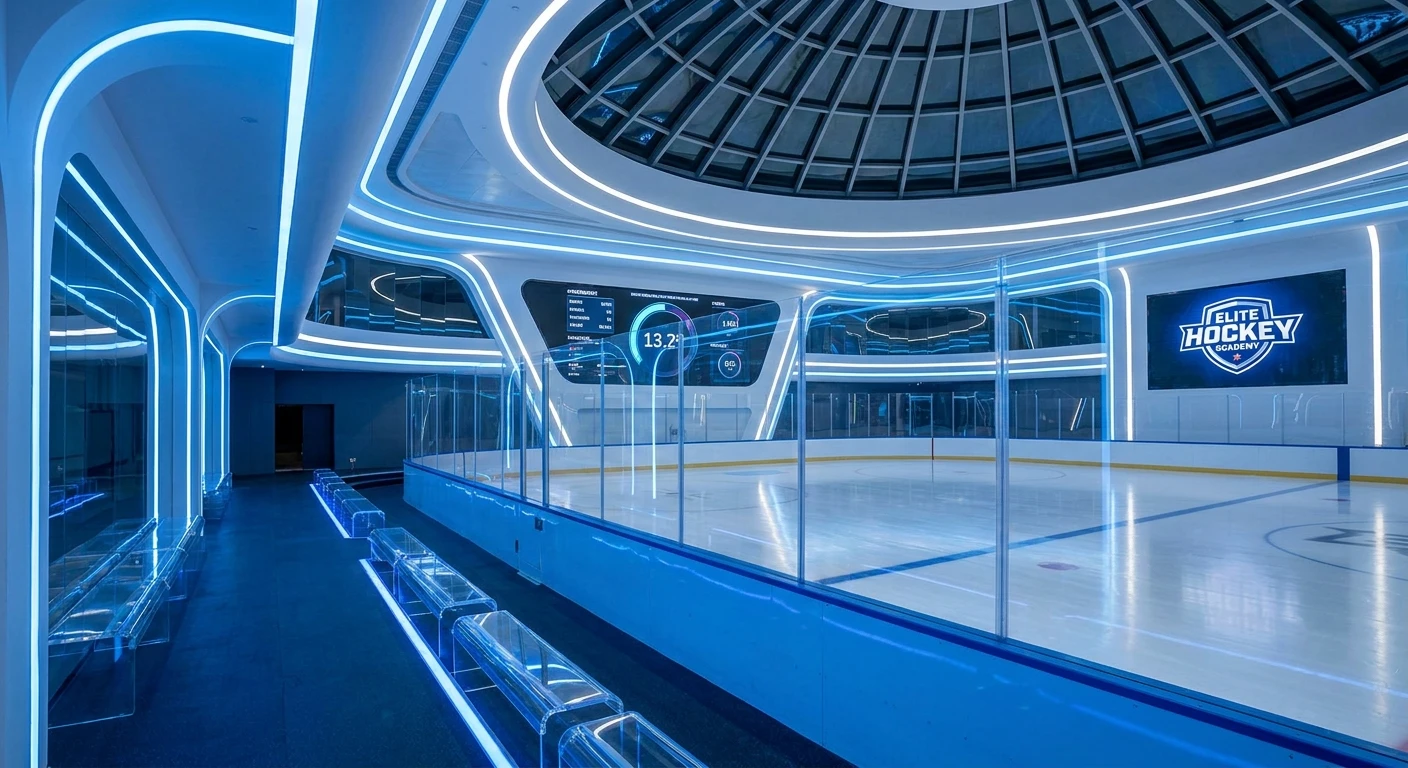
Now that we are deep into the 2026 season, the sheer scale of the facility is mind-blowing. It feels less like a gym and more like a futuristic health spa merged with a tactical military bunker. The lighting is engineered to match natural daylight to keep players energized during the dark, rainy Pacific Northwest winters. The nutrition center is staffed by executive chefs who prepare customized meals based on each player’s daily blood work and caloric expenditure. It is a stunning display of wealth, science, and a singular obsession with winning a championship. Everything is meticulously tracked, logged, and analyzed to find a competitive edge.
The Physics of Perfect Ice
You might think ice is just frozen water, but the science behind maintaining a professional rink is incredibly complex. The ice technicians at the facility are basically applied physicists. They use a massive reverse osmosis filtration system to strip out all the minerals, oxygen, and impurities from the municipal water supply. Why? Because pure water freezes much denser and harder. When a player weighing 220 pounds makes a sharp, aggressive turn at 30 kilometers an hour, the ice needs to hold up without chipping or creating dangerous ruts. The cooling systems underneath the concrete slab pump sub-zero brine through miles of tightly coiled pipes, maintaining the surface temperature to an exact fraction of a degree.
It is all about consistency. If the practice ice feels soft and sluggish, but the main game arena ice is fast and hard, the players’ timing will be completely thrown off. The puck would bounce differently off the boards, and passes would not connect. The engineering here ensures that the practice environment is a carbon copy of game day conditions.
Biomechanics and Recovery Tech
After a brutal practice session, the physical toll on the athletes is intense. Lactic acid builds up, muscles are micro-torn, and joints are inflamed. This is where the facility’s biomechanics and recovery wing truly shines. Instead of just jumping into a cold shower, the players step into a world of hyper-advanced therapeutic machinery. The goal is to compress the body’s natural healing time from days down to hours.
Here are just a few of the wild scientific facts and tools used inside the complex:
- Cryotherapy Chambers: Players step into chambers filled with liquid nitrogen vapor that drops the ambient temperature to around -200 degrees Fahrenheit, tricking the body into rapid anti-inflammatory responses.
- Hyperbaric Oxygen Therapy: Sleeping or relaxing in pressurized pods that deliver pure oxygen to the bloodstream, accelerating tissue repair and reducing massive fatigue.
- Motion Capture Cameras: Infrared cameras placed around the gym track bar paths during weightlifting, ensuring spinal alignment is perfect to prevent long-term back injuries.
- Sensory Deprivation Tanks: Soundproof pods filled with heavily salted, skin-temperature water to help goalies and high-minute players decompress mentally and lower their cortisol levels.
A 7-Day Pro Training Blueprint (Canucks Style)
Ever wanted to train like an absolute machine? While you might not have access to a multimillion-dollar indoor complex, you can still borrow the exact rhythm and structure the pros use during their regular season. Here is a 7-day blueprint inspired directly by what goes on inside the facility walls in 2026.
Day 1: High-Intensity Interval Skating
Monday mornings are all about shocking the cardiovascular system. After a dynamic warm-up in the gym, the guys hit the ice for explosive, short-burst sprints. We are talking red-line to blue-line dashes, stop-and-start drills, and rapid directional changes. The focus here is entirely on mimicking the 45-second shift length of a real game. You go all out, rest for a minute, and repeat until the tank is empty.
Day 2: Hypertrophy and Strength Building
Tuesday shifts the focus to raw power. Inside the weight room, players are not doing bicep curls for the beach; they are doing heavy trap-bar deadlifts, Bulgarian split squats, and loaded medicine ball tosses. The goal is to build leg drive and core stability so nobody can push them off the puck during a board battle. The strength coaches meticulously monitor the velocity of every single lift.
Day 3: Active Recovery and Film Study
By Wednesday, the central nervous system is usually fried. This is a “low physical, high mental” day. Players will ride the stationary bikes at a gentle pace to flush lactic acid out of their legs. Following the light sweat, the entire roster piles into the theater-style film room. The coaching staff breaks down video clips from previous games, pausing to point out missed defensive assignments or open passing lanes.
Day 4: Game-Simulated Scrimmages
Thursday is battle day. The coaching staff sets up high-intensity, five-on-five scrimmages. They run special teams drills, practicing the power play and penalty kill structures against live, aggressive defense. The tempo is incredibly fast, and the referees (usually assistant coaches) do not call cheap fouls. It is designed to be as chaotic and intense as a real match.
Day 5: Neuromuscular Reactivity Drills
Friday is all about hand-eye coordination and reaction time. Players use light-up reaction boards, juggle tennis balls, and run through agility ladders. On the ice, goalies face rapid-fire deflections using screens and traffic to block their vision. It is less about exhausting the muscles and more about sharpening the brain’s ability to process visual information instantly.
Day 6: Tactical Systems and Positioning
Saturday is the dress rehearsal before a major game. The physical exertion is dialed back to around 70%. Instead of grinding in the corners, the team walks through face-off plays, neutral zone traps, and breakout passes. The head coach usually stands at center ice with a whiteboard, making sure every single player knows exactly where they need to be standing in specific game scenarios.
Day 7: Complete Rest and Cryotherapy
Sunday is the holy day of recovery. Zero intense physical activity is allowed. Players might come into the complex, but strictly to use the hot tubs, the cold plunges, or get deep-tissue massages from the therapy staff. Nutritionists load them up with complex carbohydrates and lean proteins to rebuild muscle fibers. Mental health breaks and family time are heavily encouraged to prevent mid-season burnout.
Myths & Reality About Pro Practice Hubs
People make a lot of assumptions about what goes on in the NHL behind the scenes. Let’s clear up some of the most common misconceptions I hear all the time from casual fans.
Myth: The players just skate around casually for an hour and then go home to play video games.
Reality: A standard practice day is practically a 9-to-5 job. Players arrive early for breakfast, do a pre-ice gym warmup, skate for 90 minutes, do video sessions, hit the weight room, and then spend an hour in rehab.
Myth: The practice ice feels exactly the same as the local public rink down the street.
Reality: Public rinks are kept warmer for comfort, making the ice soft and slushy. Pro rinks are kept freezing cold and undergo extreme water purification to create a glass-like, incredibly fast surface.
Myth: Fans can just walk into the lobby and meet the team for autographs.
Reality: Security is incredibly tight. Unless it is a specific, heavily promoted open-house media day, the building is totally locked down to protect the players’ privacy and focus.
Myth: Goalies do the exact same workouts as the big heavy defensemen.
Reality: Goalie training is an entirely different universe. While defensemen lift heavy weights for brute strength, goalies focus intensely on hip mobility, flexibility, and lateral explosive power to prevent groin tears.
Frequently Asked Questions
Where is the main training center located?
While I won’t give out the exact street directions for security reasons, it is located within a reasonable driving distance from the main downtown arena, allowing players to commute easily between their homes, practice, and actual games without getting stuck in massive traffic jams.
Can the general public skate on the same ice?
Unfortunately, no. The ice is strictly reserved for the professional team and their affiliated development squads. Maintaining the pristine condition of the surface is too critical to allow public free-skating sessions.
Do players eat all their meals at the facility?
Many of them do! The complex employs full-time professional chefs who prepare breakfast and lunch. Some players even take pre-packaged, macro-counted dinners home with them to make sure they are eating clean on their days off.
What kind of gym equipment is actually there?
You won’t find many standard commercial machines. It is filled with elite power racks, Olympic lifting platforms, Keiser pneumatic resistance machines, and customized cardio bikes hooked up to computer monitors tracking wattage output.
Is there a dedicated medical staff on-site?
Absolutely. There is a full suite of athletic trainers, physical therapists, and sports medicine doctors available at all times. They have portable X-ray and ultrasound machines right there in the locker room area.
How cold is the rink actually kept?
It is freezing. The ambient air temperature is usually kept well below 60 degrees Fahrenheit (around 15 Celsius), while the ice itself is maintained at a crisp 18 to 20 degrees Fahrenheit (-7 Celsius) to keep it rock hard.
Are practices open to the media every single day?
No, the coaching staff often runs “closed” practices. This happens frequently when the team is working on top-secret power-play formations or trying to fix major defensive flaws that they don’t want leaked to opposing scouts or splashed all over Twitter.
Do visiting teams ever use the complex?
Very rarely. Visiting teams usually just hold a quick morning skate at the main downtown arena where the actual game will be played. The private complex is basically a heavily guarded fortress for the home team only.
Final Thoughts on Pro Hockey Preparation
At the end of the day, understanding the absolute grind that happens inside these walls makes you appreciate the sport so much more. The speed, the hits, and the unbelievable goals you see on television are all forged in the quiet, exhausting hours spent at the practice center. It is an environment built purely for extreme dedication and resilience. Drop a comment below if you would ever want to attempt an NHL pro workout routine, and make sure to share this massive breakdown with your hockey group chats! Let’s keep the hockey spirit alive!