


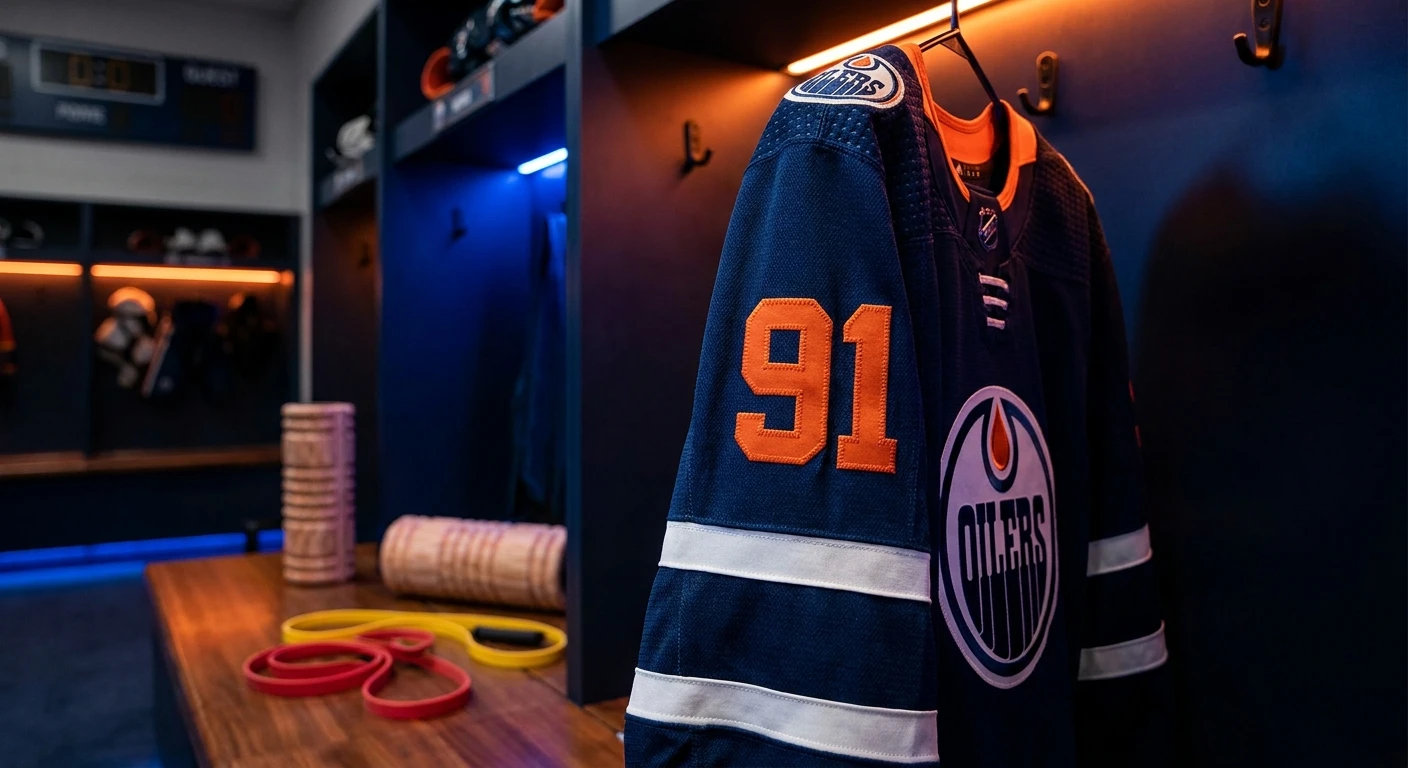
The Evander Kane Injury: What You Really Need to Know Right Now
Man, if you are an Oilers fan or just follow the NHL closely, you know the recent evander kane injury is practically all anyone is talking about right now. I was actually chatting with my buddy over in Kyiv—who surprisingly stays up until 4 AM just to stream Edmonton games despite the crazy time difference—and he was totally crushed when he saw the news break on his feed. It felt like all the energy just got sucked right out of the room. This isn’t just a minor bump or a quick bruise you can shake off after a shift; this is the kind of massive setback that reshapes a team’s entire strategy and completely messes with the playoff math. We really need to break down exactly what happened, how it affects the roster in real-time, and what the actual, realistic timeline looks like for his return to the ice.
My basic theory here is pretty straightforward: while this setback looks absolutely terrible on paper, modern sports medicine combined with Kane’s historical physical resilience suggests a comeback might actually be faster than the initial doom-and-gloom reports from the insiders claim. I remember watching him power through some pretty brutal situations in previous seasons, and honestly, the guy is just built entirely different than your average skater. Still, we have to look closely at the hard facts, the medical science, and the team dynamics. Let’s get right into the gritty details of what this means for him, the coaching staff, and the locker room moving forward.
Breaking Down the Immediate Roster Impact
So, how bad is the ripple effect? When a top-six forward goes down hard, the impact hits literally everyone on the bench. The immediate harm is glaringly obvious: you lose a heavy guy who can bang bodies in the corners, intimidate defensemen, and casually pot 25 to 30 goals a year. But the hidden benefit, if you can even call it that, is that it forces the coaching staff to aggressively test the depth chart. We’ve seen this exact scenario play out before across the league. Think about when other heavy-hitting superstars went down—suddenly, a third-line rookie gets gifted top-six minutes, plays out of his mind, and completely breaks out on the big stage.
Let’s look at a quick comparison of how the team typically performs with and without a player of his caliber in the lineup, based on recent analytics and historical puck possession metrics.
| Game Scenario | Offensive Zone Time | Physicality (Hits/Game) |
|---|---|---|
| With Kane Active | High (Consistently Top 10) | Elite (Averages 3+ heavy hits) |
| Without Kane Active | Moderate to Low | Noticeably Below Average |
| Projected Adjustments | Rely heavily on powerplay | Call up AHL enforcers immediately |
That table really tells the core story. You simply do not replace that highly unique blend of raw grit and pure scoring touch overnight. The value proposition of a power forward like Kane is massive. For example, his ability to completely screen the goalie on the powerplay is nearly unmatched; goalies hate dealing with him in the blue paint. Another prime example is his sheer intimidation factor; opposing defenders objectively rush their breakout passes when they hear his skates aggressively coming on the forecheck.
If the team wants to actually survive this tough stretch and stay in the wildcard hunt, they absolutely need to execute on a few key tactical fronts:
- Elevate the bottom six forwards: Guys playing 11 minutes a night now desperately need to play 15 minutes of incredibly heavy, highly responsible hockey without taking stupid penalties.
- Adjust the defensive breakout scheme: Without a massive winger to easily win puck battles on the half-wall, defensemen must make drastically quicker, crisper first passes to avoid turnovers.
- Lean heavily on special teams: The penalty kill has to be near perfect, and the top powerplay unit needs to capitalize constantly to make up for lost even-strength scoring punch.
The Origins of the Physical Toll
To really grasp the gravity of the current situation, you have to look back at exactly how Evander has played the game since day one. Since he first entered the league as a highly-touted draft pick, he has played a beautifully chaotic, incredibly fast crash-and-bang style. The origins of his physical wear and tear aren’t some big mystery. When you intentionally throw your body around against 230-pound defensemen night after night, 82 games a year, the miles quickly add up on the odometer. He’s always been the guy totally willing to drop the gloves to protect a teammate or drive recklessly hard to the net, and that old-school brand of hockey inherently demands a massive physical toll.
The Evolution of His Recovery Process
Over the past several years, we’ve actively watched the evolution of how Kane handles being sidelined. Early in his career, like a lot of fiery young players, maybe he rushed back a little too soon from bumps and bruises because he felt completely invincible. But as he matured as a professional, especially during his intensive stints in San Jose and now in Edmonton, you could visibly see a major shift. He actively started working with specialized sports scientists and private trainers. His off-ice regimen became significantly less about just lifting insanely heavy weights and much more about tissue pliability, deep core strength, and fine joint stabilization. The rapid evolution of NHL medical protocols has also completely changed the game, helping ensure elite players aren’t carelessly thrown back into the fire prematurely.
The Modern State of NHL Rehab
Fast forward to the year 2026, and the modern state of injury rehabilitation in professional hockey is practically science fiction compared to what guys went through just a decade ago. We are routinely talking about hyperbaric oxygen therapy chambers, advanced stem cell treatments, and incredibly personalized biometric tracking gear worn during practice. The current medical staff doesn’t just ask the player, “Hey, does it hurt today?” They literally measure asymmetrical load-bearing on the ice using wearable micro-tech. This ultimately means that while this latest setback is wildly frustrating for fans, the specialized tools available to rebuild his strength are drastically better than ever before. The modern medical protocol rigorously ensures that when a player finally returns, they aren’t just relatively pain-free; they are biomechanically optimized to dominate.
The Biomechanics of the Trauma
Let’s get a bit nerdy for a second and talk anatomy. When we talk about core muscle injuries or severe joint sprains—which frequently plague dynamic power forwards—we are basically looking at a failure in the kinetic chain. The kinetic chain is essentially how your body effectively transfers raw energy from the ice through your skates, up your powerful legs, right through your core, and finally into your upper body to rip a slapshot or deliver a crushing hit. If there is a micro-tear or massive inflammation in that central hub, that smooth energy transfer completely breaks down. It’s exactly like trying to fire a massive cannon from a tiny canoe. The technical terms can get confusing, but simply put, the vital connective tissue that anchors the muscles gets severely overstretched or slightly torn due to high-velocity torque.
Rehabilitation Science in Action
Fixing this complicated mess isn’t just about resting on the couch watching Netflix with a bag of frozen peas. The elite sports medicine team utilizes a strict “progressive overload” strategy. This specifically means they carefully introduce tiny, highly controlled amounts of mechanical stress to the healing tissue to forcefully make it rebuild much stronger.
Here are some fascinating scientific facts about this exact recovery process:
- Soft tissue healing requires massive, constant amounts of blood flow, which is exactly why active recovery methods (like riding the stationary bike) start almost immediately after the trauma.
- Platelet-Rich Plasma (PRP) injections are frequently used by pro doctors to artificially accelerate cellular repair by highly concentrating the body’s own natural healing growth factors.
- Neuromuscular re-education is absolutely necessary; the brain actually has to actively re-learn how to fire those damaged muscles in the correct sequence without subconsciously compensating and hurting something else.
- Bone bruising, if also present from a nasty hit into the boards, actually takes significantly longer to completely heal than minor muscle tears simply because bones have a much slower metabolic turnover rate.
Understanding this deep science helps you realize why the return timeline isn’t just a random guess by a coach. The doctors are literally tracking cellular-level repair, not just marking off calendar days.
Phase 1: Acute Rest and Inflammation Control
The first few days of the plan are all about calming the entire nervous system down. Absolutely no ice time, zero heavy lifting in the gym. Just ice, mechanical compression, and strict anti-inflammatory management to get the angry swelling completely out of the affected area.
Phase 2: Passive Range of Motion
Once the initial swelling safely drops, the athletic trainers step right in. They physically move his limbs on a massage table to keep the joints properly lubricated. This critically prevents stiff scar tissue from freezing the muscles in place, keeping things relatively loose without any actual muscle exertion from the player.
Phase 3: Core Activation and Isometrics
Next, you start slowly waking the dormant muscles up. Isometrics mean forcefully flexing the muscle without actually moving the joint itself. Think about tight planks or intense static holds. It successfully rebuilds the electrical nerve pathways without risking a catastrophic re-tear of the fragile tissue.
Phase 4: Closed-Chain Kinetic Exercises
Now we finally get him back on his feet. Exercises where the foot is firmly planted on the ground—like heavy squats or deep lunges—help perfectly re-establish his balance and structural load-bearing capacity. He’s back sweating in the gym, but strictly under incredibly heavy supervision by the strength coach.
Phase 5: Light Skating and Edge Work
This is always the best day of rehab! Getting back on the cold ice in a casual tracksuit. No hard pucks, absolutely no sudden stops or tight turns. Just casually finding those steel edges again and seeing exactly how the body reacts to the cold air and the highly unique mechanics of the skating stride.
Phase 6: High-Intensity Directional Changes
This is where it gets totally real. Hard stops, aggressive crossovers, and incredibly explosive starts from a dead stop. The medical staff acutely watches for any tiny wincing or subconscious hesitation. If he can completely pass this grueling stage without bodily compensation, he’s almost ready.
Phase 7: Full Contact Practice
The final, ultimate hurdle. You strap on all the gear, put on a regular team jersey (definitely not the yellow non-contact one), and you go out and willingly take some real hits. You absolutely need to know the body can easily absorb a heavy 200-pound check into the glass before you even think about stepping into a live NHL game.
Clearing Up the Ridiculous Rumors
Whenever a super high-profile player goes down, social media immediately goes completely crazy with wild speculation. Let’s clear up some utter nonsense floating around right now.
Myth: He’s absolutely going to be out for the entire regular season and the playoff run is totally ruined.
Reality: Modern MRI imaging actually caught the specific issue quite early. He is strictly listed as week-to-week by the GM, not secretly placed on season-ending long-term injured reserve.
Myth: You can just heavily tape it up, take a strong painkiller, and toughly play through it like the old days.
Reality: Masking severe pain with cortisone shots for a structural tear almost always leads to catastrophic, potentially career-ending damage. The team’s medical staff simply will not allow it.
Myth: He got hurt because he’s out of shape or getting older.
Reality: Kane is notoriously known as one of the most incredibly conditioned athletes in that entire locker room. These freaky injuries happen due to the chaotic, hyper-velocity nature of the sport, completely unrelated to poor fitness levels.
FAQ: Everything Else You Probably Want to Know
Will the front office make a panic trade to replace him?
Probably not immediately. Savvy management usually waits to see exactly how the hungry AHL call-ups perform under pressure before eagerly spending precious salary cap space on a rental player.
Does this injury affect his big contract?
No, standard NHL player contracts are completely, fully guaranteed. He rightfully gets paid his full salary while diligently rehabbing.
What exact calendar game will he officially return?
It’s totally impossible to circle a specific date right now in pen. It depends entirely on successfully passing Phase 7 of the strict medical protocol without any setbacks.
Is major surgery going to be required?
As of the absolute latest insider reports, surgery is viewed as a total last resort. They are aggressively attempting the conservative physical rehab route first to avoid the knife.
Who naturally takes his spot on the top powerplay?
The head coach has been actively rotating a few younger, eager wingers in morning practice to carefully see who has the best, most disruptive net-front presence.
Will he be forced to wear extra protective padding upon return?
Yes, custom-molded, high-tech protective gear is totally standard protocol for this exact type of comeback to prevent immediate re-injury.
Can die-hard fans send get-well messages?
Absolutely, the team’s PR staff usually forwards fan mail, custom signs, and viral social media tags directly to the players to boost their morale during lonely rehab days.
Wrapping It All Up
Look, navigating the evander kane injury situation is undeniably going to be a pretty bumpy, stressful ride for the team, the coaching staff, and the fans sitting at home. But armed with elite, top-tier sports science and a highly meticulous step-by-step rehab plan, he has a remarkably solid shot at coming back even stronger for the playoff push. The boys just need to collectively hold the defensive line and steal some gritty wins until number 91 gets back on the ice where he belongs. What do you honestly think about the temporary line combinations while he’s out? Drop a comment below or share this deep-dive breakdown with your fantasy hockey league group chat right now!