


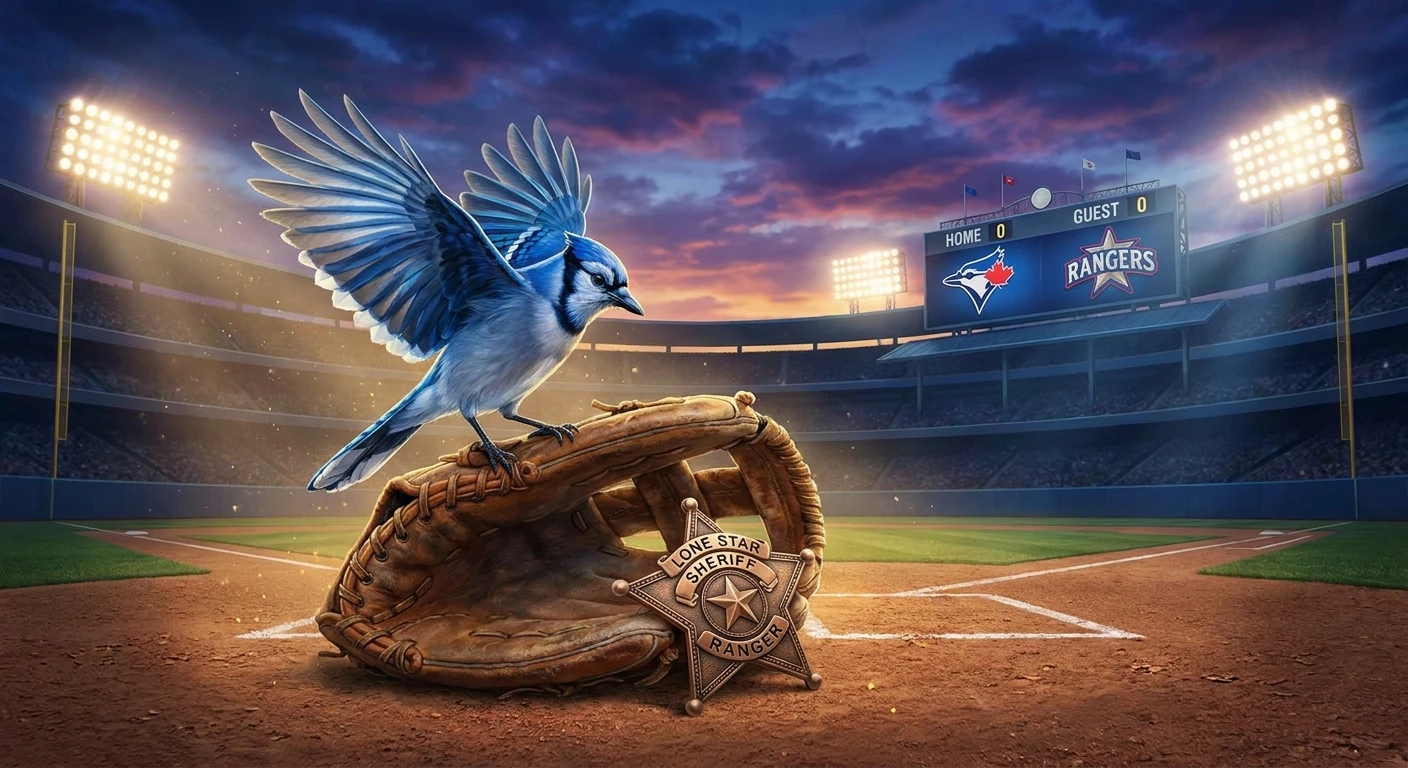
The Ultimate Breakdown: blue jays vs rangers
Man, if you are looking for the absolute peak of baseball tension, the blue jays vs rangers rivalry is exactly what you need. Think about it. I am sitting here in my apartment in Kyiv, rain pouring against the window, the clock striking 3 AM, and I have got a massive thermos of black coffee just to catch the first pitch. Why? Because the sheer drama between these two teams is absolutely electric. It goes far beyond just a standard regular-season game. Every time they step onto the field, you can feel a heavy tension vibrating through the stadium, crackling like a live wire. From my perspective, thousands of miles away in Ukraine, watching baseball has always been a way to connect with a uniquely American rhythm, but this specific matchup brings a distinctly raw, global appeal. It is impossible to turn away.
I remember the first time I convinced my friends here to stay up all night just to watch this series. They thought I was crazy. “Baseball is too slow,” they told me. But then the seventh inning happened, tempers flared, and instantly they understood. That is the magic of this pairing. The sheer unpredictability creates a narrative that rivals any cinematic thriller. If you want to grasp why the entire league pauses when these two clash, you need to understand the deep-rooted history, the mathematical precision behind the scenes, and the raw emotion of the players. Stick with me, because I am going to map out exactly how to appreciate every single inning.
Why This Matchup Keeps Us Hooked
Look, the core value of tuning into these games is witnessing an incredible clash of conflicting baseball philosophies. You are getting a masterclass in aggressive plate discipline versus chaotic, high-velocity pitching. The benefit for you as a viewer is pure, unadulterated entertainment. You do not just watch these games; you absorb them. Think about the value proposition here: you get high-stakes drama, elite athletic performance, and a crowd atmosphere that translates perfectly through the television screen. For example, when Toronto relies heavily on their slugging percentage to overcome late-inning deficits, or when Texas deploys a meticulously calculated bullpen strategy to shut down power hitters, you are seeing high-level chess played at 95 miles per hour.
| Team Identity | Core Strategy | Historical Vulnerability |
|---|---|---|
| Toronto | High Exit Velocity & Power Pulls | Inconsistent Middle Relief |
| Texas | Aggressive Base Running & Heat | Susceptibility to Breaking Balls |
| The Matchup | Grinding At-Bats | High Emotional Volatility |
To truly get the most out of watching this specific rivalry, you need to approach it strategically. Here is exactly how I prepare to analyze their games:
- Track the starting pitching matchups: The dynamic shifts drastically depending on whether a heavy sinkerballer or a high-spin fastball guy takes the mound. Pay attention to the first three batters.
- Monitor the emotional temperature: I am serious. Watch the body language in the dugouts during the third and fourth innings. If there is a tight inside pitch, the entire complexion of the game changes instantly.
- Analyze the late-inning defensive shifts: Both managers employ radically different defensive alignments late in the game. Watching them out-manage each other is half the fun.
When you focus on these three layers, the game opens up. You stop seeing just guys hitting a ball and start seeing a beautifully coordinated tactical war.
Origins: The Quiet Early Years
It is wild to think that this rivalry used to be just another date on the calendar. Decades ago, neither team really saw the other as a massive threat. Texas was busy dealing with their divisional nightmares, and Toronto was focused on conquering the AL East. When they played, it was standard, run-of-the-mill baseball. You would buy a ticket, grab a hot dog, and just enjoy a lazy afternoon. There was no bad blood, no intense glaring from the mound, and certainly no benches-clearing brawls. It was a polite exchange between two clubs trying to find their respective identities in a crowded league.
Evolution: The Infamous Bat Flip Era
Everything changed dramatically in 2015. If you know anything about baseball history, you know the exact moment I am talking about. The playoff series between these two became legendary. The intense back-and-forth, the bizarre errors, and then, the towering home run accompanied by the most aggressive, disrespectful, and totally glorious bat flip the sport had ever seen. The tension did not end there. The very next season, that lingering disrespect erupted into a literal fistfight at second base. Suddenly, this was not just a game anymore; it was a personal vendetta. Every pitch thrown inside became a message. Every slide into second base became a declaration of war. The entire culture around these games shifted from polite applause to screaming intensity.
Modern State: The 2026 Landscape
Fast forward to the year 2026, and the dust has somewhat settled, but the scars remain. The current rosters might not have all the exact same players from those infamous brawls, but the franchises absolutely remember. The fans remember. When Toronto travels to Texas, or vice versa, the stadium operations teams actually prepare for higher decibel levels. The modern state of this matchup is a beautiful blend of historical bitterness and cutting-edge baseball. Both teams have heavily invested in analytics, meaning their hatred is now backed by supercomputers. They know exactly where to pitch to exploit weaknesses, making the modern iteration of this rivalry smarter, faster, and arguably more intense than ever before.
The Physics Behind the Fastball
Let’s get slightly nerdy for a second because you cannot appreciate the modern game without understanding the science happening on the mound. When a Texas pitcher unleashes a 99-mph fastball, it is not just about raw strength; it is a masterclass in biomechanics and physics. The Magnus effect—the physical phenomenon that causes a spinning object to curve away from its principal flight path—dictates how much “rise” or “run” a pitch has. Pitchers are practically engineering their grips to maximize spin rate, creating optical illusions for the hitters. A fastball thrown with a high active spin rate will actually resist gravity slightly longer than a hitter’s brain expects, causing them to swing entirely underneath the ball.
Decoding Sabermetrics for the Fan
On the flip side, Toronto hitters are utilizing advanced sabermetrics to counter this physics engine. Sabermetrics is the empirical analysis of baseball, focusing on specialized statistics that measure in-game activity more accurately than traditional stats like batting average. By understanding “Launch Angle” and “Exit Velocity,” hitters can optimize their swings to ensure that if they do make contact, the ball bypasses the defensive shift entirely. Here are a few scientific realities of the modern game:
- Spin Rate dictates movement: A curveball spinning at 2,800 RPMs creates significantly more air drag and drop than one at 2,200 RPMs, drastically altering the hitter’s spatial perception.
- The Launch Angle sweet spot: Hitters mathematically aim for a launch angle between 15 and 25 degrees to maximize the probability of extra-base hits.
- Reaction time limits: A 100-mph fastball gives a hitter approximately 150 milliseconds to decide whether to swing, pushing human neural processing to its absolute biological limit.
- Kinematic Sequence: Elite power hitters generate force starting from the ground, transferring kinetic energy up through their hips, torso, and finally the bat, multiplying the force upon impact.
Day 1: Review the Rosters
Alright, if you want to be fully prepped for the weekend series, you need a solid action plan. Start your Monday by reviewing the current active rosters. Check the injury reports. Who is on the IL? Who just got called up from Triple-A? Knowing exactly who is available sets the baseline for your expectations. If a star closer is dealing with a shoulder issue, you immediately know late innings will be vulnerable.
Day 2: Analyze the Bullpens
On Tuesday, dig into the bullpen usage. Relievers are the unsung heroes of this rivalry. Look at the pitch counts from the previous weekend. If Texas had to use their top setup men three days in a row, Toronto’s strategy will naturally shift to grinding out long at-bats to force the starters out early. Bullpen fatigue is a massive predictor of game outcomes.
Day 3: Deep Dive into Matchup History
Wednesday is for historical context. Check the head-to-head stats of the specific starting pitchers against the opposing lineup. Some pitchers just have a mental block against certain teams. Look for anomalies—like a guy with a great ERA who somehow always gives up runs in this specific stadium.
Day 4: Study the Park Factors
Thursday, consider the geography. Which stadium are they playing in? The dimensions of the outfield, the height of the walls, and even the local weather significantly impact the game. A fly ball that is an easy out in one park is a home run in another. Humidity and wind direction alter the ball’s flight path drastically.
Day 5: Monitor the Media Narrative
Friday morning, hop on social media and listen to the press conferences. Are the managers throwing subtle shade? Are the players downplaying the history? The media narrative often dictates the emotional energy of the first pitch. If there is a lot of talk about “sending a message,” expect inside fastballs early.
Day 6: Prepare the Setup
Saturday is game day. Get your viewing area ready. If you are like me, streaming at 3 AM, secure the snacks, the coffee, and double-check your internet connection. You do not want a buffer right as a bases-loaded situation unfolds in the eighth inning.
Day 7: The Post-Game Breakdown
Sunday is for reflection. After the series concludes, look at the box scores. Did the sabermetric predictions hold up? Did the managers make the right bullpen calls? Breaking down the game after the fact makes you a much smarter fan for the next time these giants clash.
Myths and Realities
Myth: The rivalry is entirely fabricated by the media for better ratings.
Reality: While the media certainly amplifies the drama, the genuine dislike between the older core players was real. You cannot fake a right hook to the jaw during a nationally televised game.
Myth: It is impossible to predict a baseball game because it is too random.
Reality: Baseball is highly mathematical. While single events have variance, long-term trends, launch angles, and pitcher tendencies provide incredibly accurate predictive models.
Myth: Modern players do not care about the history of the beef; they just play.
Reality: Clubhouse culture runs deep. Veterans pass down the history, and even rookies quickly learn that certain series demand a higher level of intensity and focus.
Myth: Watching on TV cannot capture the stadium’s energy.
Reality: With 2026 broadcasting tech, field-level microphones, and drone cameras, the broadcast actually offers a more intimate look at the tension than sitting in the upper deck.
When is the best time to watch?
Honestly, the night games are the best. The atmosphere under the stadium lights adds an incredible cinematic quality to the tension. Day games are fun, but the shadows can make hitting weird.
Are the old players still involved?
Most of the guys from the 2015-2016 era have retired or moved on, but their legacy absolutely dictates the modern culture of both clubhouses.
Which stadium provides a better fan experience?
Both have unique perks. Toronto’s dome gets incredibly loud, practically trapping the sound. Texas has a beautiful, climate-controlled modern facility that keeps you perfectly comfortable.
Do analytics ruin the fun of the rivalry?
Not at all. Analytics enhance it. Knowing that a manager intentionally shifted a defense perfectly based on a computer model, only for the hitter to beat it, is thrilling.
How do I pick a side?
Watch one series objectively. You will naturally gravitate toward either the aggressive, high-flying style of one or the calculated, heavy-hitting style of the other.
Is it safe to go to these games in person?
Absolutely. Despite the on-field drama, stadium security is top-notch, and the fan bases generally keep the banter good-natured and fun.
Where can I stream it internationally?
Most major sports streaming apps carry MLB packages now. Just make sure you account for the massive time zone differences if you are watching from Europe.
So, there you have it, my friend. You are fully equipped to understand every nuance of this massive clash. From the deeply rooted historical grudges to the cutting-edge physics of the pitches, this is baseball at its absolute finest. Do not miss out on the next chapter of this epic saga. Grab your snacks, check the schedules, and lock in for the next game today!