


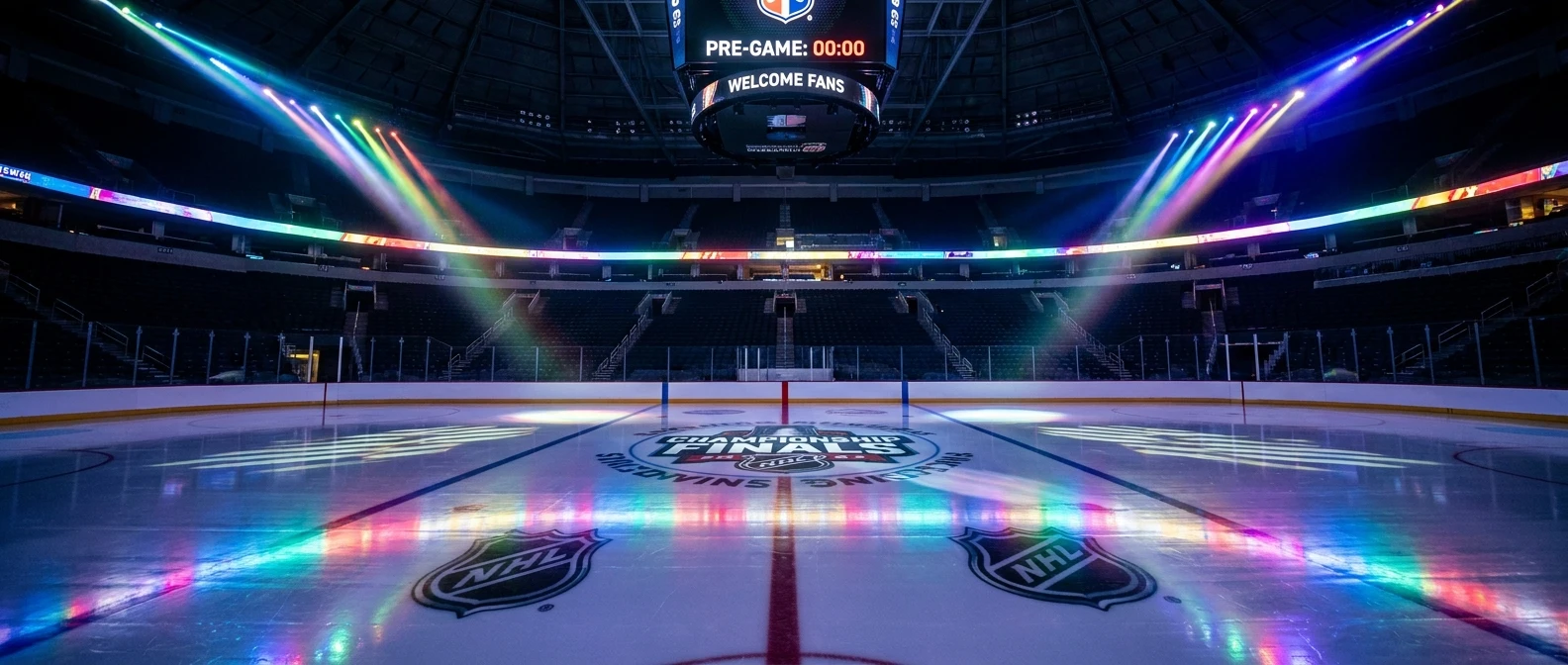
Why the mem cup Is the Ultimate Test of Grit
You know the feeling when the mem cup rolls around and suddenly every hockey fan is glued to their screens, over-analyzing every single pass, hit, and save? It hits differently than the professional leagues. Back in Kyiv, during some of those brutal winter nights when the power grid was playing games with us, a bunch of my friends and I would huddle around a single glowing laptop screen hooked up to a backup battery just to catch the late-night North American streams. We’d be sipping intensely strong tea, wrapped in heavy wool blankets, completely mesmerized by the sheer, unfiltered speed of junior hockey’s biggest prize. The chat groups would be pinging non-stop with wild predictions and heated debates about which prospect was actually overhyped and which one was a hidden gem.
This tournament isn’t just a shiny piece of hardware handed out at the end of May. It is a brutal, beautiful gauntlet that tests the absolute limits of human endurance, teamwork, and raw athletic talent before these kids ever hit the multi-million dollar professional leagues. It separates the pretenders from the absolute warriors. Now that we are solidly into 2026, the game has only gotten faster, more technical, and infinitely more intense. Whether you are a die-hard scout tracking draft stock or just a casual fan looking for the purest form of the sport, understanding the mechanics of this championship changes the way you watch the game. It is high-stakes drama, pure adrenaline, and an absolute masterclass in resilience.
The True Value of the Tournament
So, what exactly makes this event so critical for the hockey ecosystem? It boils down to a massive collision of playing styles, immense pressure, and unparalleled exposure. You have the champions from three entirely different regional leagues, plus a host team, all smashing into each other over a ten-day sprint. The physical toll is astronomical, but the upside for the players is life-changing.
| League | Historical Style of Play | Regional Identity |
|---|---|---|
| WHL (Western Hockey League) | Heavy, physical, defensively structured, hard-hitting | Western Canada & US Pacific Northwest |
| OHL (Ontario Hockey League) | Fast-paced, highly skilled, transition-heavy | Ontario & US Rust Belt |
| QMJHL (Quebec Maritimes Junior Hockey League) | Offensive flair, creative playmaking, high-scoring | Quebec & Atlantic Canada |
For the athletes on the ice, the value proposition of competing in this environment is twofold.
Example 1: The Undrafted Grinder’s Showcase. Imagine a gritty, 19-year-old third-line center who was passed over in the NHL draft twice. He goes into this tournament, shuts down the opposing team’s star player, wins 65% of his faceoffs, and suddenly, he has three professional AHL contract offers waiting for him when he steps off the ice. This tournament is the ultimate job interview.
Example 2: The Elite Prospect’s Final Exam. Take a projected top-five NHL draft pick. Scouts know he has the skills, but they want to see if he folds under the immense pressure of a national television audience and a hostile crowd. When he puts the team on his back and scores the game-winning goal in the semi-final, he completely solidifies his franchise-player status.
If you want to watch the games like a pro scout rather than just a casual observer, here is exactly how you should approach it:
- Watch the off-puck movement: Pay attention to what the wingers are doing when they don’t have the puck. Are they coasting, or are they actively finding soft spots in the defensive coverage?
- Track the goaltender’s rebound control: In a short tournament, bad rebounds kill teams. Watch how the goalies absorb shots to the chest versus kicking them out to the slot.
- Monitor the line matching: Keep an eye on which defensive pairing the coach sends out after an icing call. The tactical chess match behind the benches is incredible.
- Follow the body language: When a team goes down by two goals in the first period, watch the bench. The energy on the bench dictates exactly how the second period will go.
The Origins of the Tournament
The history of this trophy is rooted in profound sacrifice. It wasn’t originally created as a corporate marketing tool; it was born out of profound respect and remembrance. Originally known as the OHA Memorial Cup, it was donated in 1919 by the Ontario Hockey Association to honor the men and women who died fighting for Canada in the First World War. Captain James T. Sutherland, a prominent figure in the sport’s early days and a veteran himself, was instrumental in establishing this tradition. The idea was to create a perpetual memorial that would unite the country through its national winter sport. In those early decades, the format was vastly different, mostly consisting of east-versus-west series that required brutal, multi-day train rides just to get to the host city.
The Evolution Through the Decades
As the sport expanded, so did the complexity of the tournament. The most significant shift happened in 1972 when the format changed to a round-robin tournament featuring the champions of the three major junior leagues (WHL, OHL, QMJHL). This created a unified, undisputed national champion. Then, in 1983, the format evolved again with the permanent inclusion of a predetermined host team. This was a brilliant move because it guaranteed a sold-out arena and electric local atmosphere, regardless of which leagues won their respective championships. It added an unpredictable wildcard element, as the host team often had weeks of rest before the tournament began, contrasting with the league champions who were battered from long playoff runs.
The Modern State in 2026
Fast forward to 2026, and the landscape is entirely unrecognizable from those early days, even though the spirit remains the same. The tournament is now a massive, multi-million dollar television event broadcast globally. Players are wearing wearable tech that tracks their heart rate and skating speed in real-time. Video coaches on the bench are using tablets to review defensive breakdowns seconds after they happen. Nutritionists map out exact hydration protocols for the grueling back-to-back game days. Despite all this high-tech gloss, the core of the tournament remains incredibly raw: teenagers leaving absolutely everything they have on the ice for a chance at hockey immortality.
The Biomechanics of a Slapshot
Let’s talk about the pure science of what you are seeing on the ice, starting with the slapshot. It looks like a simple swinging motion, but it is actually an incredibly complex kinetic chain. It begins in the skates, where the player digs into the ice to create a stable anchor. The energy transfers up through the legs, into the hips, which violently rotate. This torque moves through the core and into the shoulders. The most crucial part is when the blade of the stick strikes the ice slightly behind the puck. The composite stick flexes like a bow, storing kinetic energy. When the blade finally connects with the puck, that stored energy is violently released, propelling the vulcanized rubber at speeds exceeding 100 miles per hour. It is a masterpiece of applied physics.
Ice Physics and Skate Tech
The ice itself is a highly engineered surface. The temperature of the rink is usually maintained at exactly 16 to 24 degrees Fahrenheit, depending on the building’s humidity and the number of fans in the seats. If the ice gets too warm, it becomes soft, increasing friction and slowing down the game. If it gets too cold, it becomes brittle and chips easily, leading to dangerous ruts. The players’ skates are hollowed out down the middle of the blade, creating two distinct edges. The depth of this hollow determines how deeply the skate bites into the ice.
- Kinetic Friction Coefficient: The thin layer of water created by the pressure of the skate blade dramatically reduces friction, allowing for high-speed gliding.
- Lactate Accumulation: In a short tournament with back-to-back games, players experience rapid lactic acid buildup in their muscle tissues, requiring specialized active recovery protocols to prevent complete muscle failure.
- Visual Reaction Time: A goaltender facing a 90 mph shot from the top of the circles has roughly 0.45 seconds to track the puck, process the trajectory, and execute a physical block.
- Composite Material Memory: Modern hockey sticks are built with carbon fiber layered at specific angles. Over the course of the tournament, the constant flexing causes micro-fractures in the resin, which is why players frequently switch sticks before crucial faceoffs.
Day 1: The Roster Breakdown
Your first day of preparation involves entirely geeking out over the rosters. Don’t just look at the top scorers; you need to dig into the depth charts. Find out which team has the oldest defensemen. In junior hockey, a 20-year-old defenseman is practically a grown man playing against teenagers. Experience on the blue line almost always dictates who controls the pace of the game. Look up the penalty kill percentages for each squad, because special teams will absolutely make or break their tournament run.
Day 2: Scouting the Goalies
Goaltending is the ultimate wildcard. Spend this day watching highlight packages and reading scouting reports on the four starting netminders. Are they big, blocking-style goalies who rely on positioning, or are they athletic, reaction-based goalies who make acrobatic desperation saves? Note their workloads. A goalie who just played a seven-game playoff series might be physically exhausted, while the host team’s goalie might be dealing with a heavy layer of rust from a month off.
Day 3: Following the Tactics
Now you need to understand the systems. Spend time reading up on the head coaches. Does the WHL team run an aggressive 2-1-2 forecheck, or do they sit back in a neutral zone trap? Does the QMJHL team rely heavily on stretch passes to exit their defensive zone? Understanding the tactical identity of each team will help you predict how they will match up against opposing styles.
Day 4: Engaging with the Fanbase
Hockey is a community sport. Jump into the chaotic group chats, the Telegram channels, and the Reddit threads. Share your predictions. Talk a little friendly trash with fans from opposing leagues. The sheer amount of localized knowledge you can pick up from a die-hard fan from a small Canadian junior hockey town is incredible. They know exactly which players are nursing secret injuries and which ones are poised for a breakout performance.
Day 5: Hosting the Watch Party
It is time to set up the viewing experience. Get the biggest screen you can find. Make sure the audio is dialed in perfectly so you can hear the skates carving the ice and the puck hitting the post. Order an aggressive amount of pizza and wings. Invite your friends who might not even care about hockey; the sheer intensity of the round-robin games usually converts them into fans by the end of the second period.
Day 6: Analyzing the Semifinals
The round-robin is over, and the stakes are at their absolute peak. This is the elimination game. Pay extremely close attention to the coaching adjustments. Teams have now scouted each other in real-time. Watch how they change their powerplay breakouts to counter the penalty killers. This is where the tactical chess match gets incredibly gritty, and you will see players sacrificing their bodies to block shots.
Day 7: Championship Sunday Setup
The final game. The atmosphere is completely suffocating. Ensure you have no distractions for the next three hours. Watch the warmups. Look at the faces of the players on the bench during the national anthems; you can usually tell who is hyper-focused and who is letting the nerves get to them. Once the puck drops, enjoy the highest level of amateur hockey on the planet.
Myths & Reality
Myth: It is just a junior tournament; the level of play isn’t that high.
Reality: The intensity and speed rival many professional AHL games. These rosters are packed with future NHL superstars who are playing the most desperate, passionate hockey of their lives.
Myth: The host team always has an unfair advantage because they are rested.
Reality: That rest often translates directly into terrible rust. Host teams frequently come out flat in their first two games and struggle to match the battle-tested intensity of the league champions.
Myth: The team with the most NHL draft picks will easily sweep the tournament.
Reality: High-end skill is great, but these short tournaments are almost always won by gritty, older, physical role players who excel at shutting down superstars and grinding out ugly goals.
Myth: European players struggle to adapt to the physical North American style of this event.
Reality: The modern game is completely globalized. European import players consistently dominate the scoring races and adapt seamlessly to the aggressive forechecking systems.
What is the mem cup?
It is the ultimate championship trophy for the Canadian Hockey League, contested annually by four teams in a grueling round-robin format.
Who competes for it?
The tournament features the playoff champions from the WHL, OHL, and QMJHL, alongside a pre-selected host team from one of those leagues.
When is it held?
The tournament traditionally takes place in late May, capping off the grueling junior hockey season and playoff runs.
Why is it so hard to win?
Players must endure an incredibly long regular season, a bruising two-month playoff run in their own league, and then face the absolute best teams from across the continent in a frantic ten-day sprint.
Can drafted players compete?
Yes, absolutely. Many players in the tournament have already been drafted by NHL franchises but are developing in junior leagues before turning professional.
How long is the tournament?
It spans roughly ten days, featuring a round-robin stage followed by a semi-final and a winner-take-all championship game.
Where can I stream it?
Major sports networks globally carry the broadcasting rights, and there are multiple official digital streaming packages available online for international fans.
Final Thoughts
The pure magic of this tournament lies in its fleeting nature. These specific rosters will never play together again. Next year, the older players will age out into professional hockey, and the younger ones will be traded. They have one highly pressurized window to etch their names into history. If you haven’t fully experienced the chaos, skill, and heart of this championship, 2026 is your year. Grab your friends, study the rosters, and get ready for the best hockey you will watch all season. Drop a comment below with your championship prediction and let’s get the debate started!