


The Unforgettable Legacy of lyndon slewidge
Whenever you hear the roar of a hockey arena just before the puck drops, you immediately understand the sheer electricity of the game. For decades, one name was synonymous with that pre-game magic: lyndon slewidge. As a Ukrainian SEO Content Specialist who grew up thousands of miles away from North American ice rinks, I still distinctly remember catching a fuzzy, late-night satellite stream of a playoff hockey game back in the early 2000s. I heard this booming, authoritative baritone voice echoing through the arena, and I was completely mesmerized. That voice did not just sing a song; it commanded respect and set the entire emotional stage for the battle on the ice.
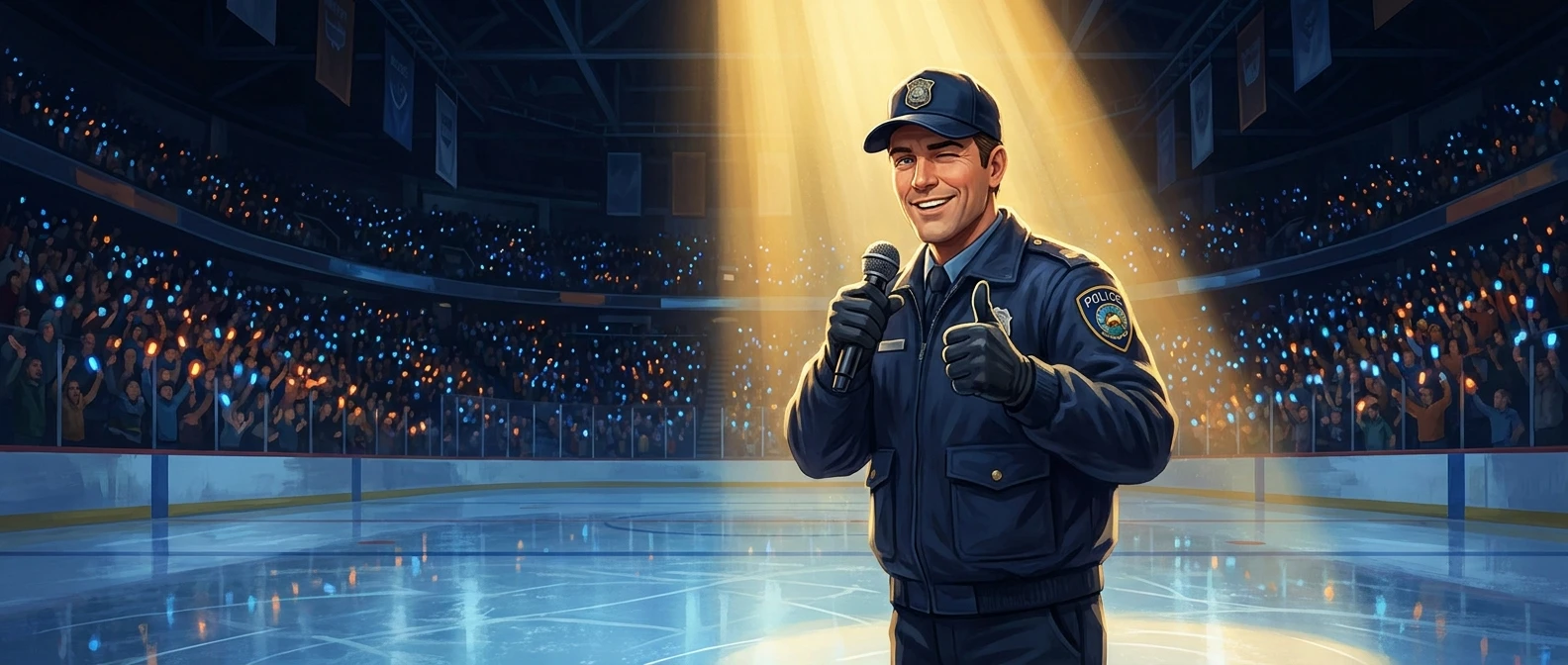
It is fascinating how a single performer can become an inseparable part of a sports franchise’s identity. He became a true symbol of community, resilience, and unwavering sportsmanship. Even now in 2026, long after his regular appearances ended, fans still talk about that iconic wink, the crisp salute, and the enthusiastic thumbs up he delivered at the end of every anthem. I want to talk to you directly about why his specific style worked so incredibly well, the genuine science behind filling a massive stadium with raw vocal power, and the history of the man affectionately known as the singing cop. This is not just a hockey story; it is a masterclass in performance and presence.
Why the Anthem Singer Dictates the Game’s Energy
Listen, you might think the pre-game ceremonies are just a formality, a quick musical break before the players start hitting each other. But that could not be further from the truth. The anthem sets the exact psychological baseline for both the players and the tens of thousands of screaming fans. When you have a massive presence handling the microphone, it legitimately shifts the momentum before the clock even starts ticking.
A phenomenal singer brings incredible value to the franchise. First, they unify the home crowd, creating an intimidating wall of sound that opposing teams immediately feel. Second, they establish a reliable, comforting tradition that keeps fans coming back year after year. Let me give you a couple of concrete examples of how this value plays out. When the team is on a losing streak, a fiery, familiar rendition of the national anthem reminds the crowd of their loyalty, keeping the energy high despite bad odds. Alternatively, during the high-stakes playoffs, that same familiar voice grounds the nervous energy, transforming anxiety into absolute hype.
Let’s look at how a few iconic performers compare across the league:
| Anthem Singer | NHL Franchise | Signature Style / Move |
|---|---|---|
| Lyndon Slewidge | Ottawa Senators | The Salute, Wink, and Thumbs Up |
| René Rancourt | Boston Bruins | The Dramatic Fist Pump |
| Mark Donnelly | Vancouver Canucks | Passing the Microphone to the Crowd |
So, what exactly makes someone a legendary arena vocalist rather than just a good singer? Here is the exact breakdown:
- Unyielding Pitch Accuracy: Arenas have terrible natural acoustics, so hitting the exact note without faltering is incredibly difficult.
- Magnetic Crowd Engagement: You are not singing at a quiet theater; you must physically project your charisma to the very back row.
- Impeccable Pacing: The singer must read the room, holding notes just long enough to draw cheers without dragging the ceremony out and cooling off the players.
Origins of the Singing Cop
You cannot fully appreciate his legacy without understanding where he started. He did not originate in a fancy music conservatory or an elite opera house. He spent his primary career as an officer with the Ontario Provincial Police (OPP). This background in law enforcement is absolutely crucial to understanding his stage presence. When you work as a police officer, you learn how to project authority, maintain total calm in chaotic environments, and command attention simply by stepping into a room. He brought every ounce of that disciplined energy directly onto the ice. He started singing at local events, charity fundraisers, and smaller sports games, quickly earning a reputation for his incredibly rich voice and rock-solid reliability.
Evolution of His NHL Career
When the modern Ottawa Senators franchise was established and began playing in 1992, they needed someone to anchor their pre-game rituals. They brought him in, and it was a match made in heaven. Over the years, he evolved from a guest singer to the absolute emotional center of the arena. He sang in both English and French, seamlessly blending the Canadian anthem to represent the bilingual nature of the nation’s capital. When American teams visited, his rendition of the Star-Spangled Banner was equally powerful, always delivered with the utmost respect. For over two decades, he stood on that red carpet, wearing his formal police uniform or a sharp suit, becoming as recognizable to the fanbase as the team captain.
Modern State of Anthem Singers
Fast forward to the present day. The landscape of sports entertainment has shifted massively. Teams often cycle through various local artists, choirs, and contest winners to promote community engagement. While this variety is great for local arts, it sacrifices the deep, emotional continuity that a permanent fixture provides. The era of the undisputed, solo “voice of the franchise” is becoming rarer, making us appreciate the legendary run of the singing cop even more. He represents a golden era of sports tradition that fans are deeply nostalgic for.
The Vocal Mechanics Behind the Boom
Understanding Laryngeal Power and Resonance
Have you ever wondered how a human voice cuts through the ambient noise of 19,000 shouting fans, buzzing neon lights, and roaring stadium speakers? It comes down to hardcore vocal mechanics. A true baritone voice relies on a highly efficient use of the larynx and exceptional breath support from the diaphragm. When projecting into a massive space, the singer utilizes their chest and facial cavities as organic amplifiers. This is called sympathetic resonance. Instead of pushing from the throat, which would blow out vocal cords in a matter of weeks, a seasoned professional drops their breathing deep into their abdomen, creating a massive column of air that supports the sound waves effortlessly.
Navigating Stadium Acoustics and Delay
Singing in a hockey arena is literally an acoustic nightmare. The surface of the ice is entirely reflective, meaning sound bounces off it sharply and chaotically. Furthermore, the PA systems in these massive structures create a distinct delay. When you sing a note, you hear it bounce back to you a fraction of a second later. If you listen to the echo, you will instantly lose your timing. Here is a breakdown of the intense acoustic environment an arena vocalist faces:
- Feedback Loop Disorientation: Singers must train their brains to ignore the delayed sound hitting their ears and rely entirely on muscle memory and internal tempo.
- High-Frequency Absorption: The bodies of 19,000 fans act as sound absorbers, specifically dampening higher frequencies, meaning a rich baritone actually carries its core warmth much better through the crowd.
- Ice Surface Reflection: Unlike grass or turf, solid ice creates harsh, immediate sound deflections, requiring the singer to project upward rather than directly forward.
- Microphone Proximity Effect: Mastering the exact distance from the microphone ensures the booming low notes do not distort the sound system.
Your 7-Step Guide to Projecting Confidence Like a Stadium Legend
You might not be auditioning to sing for a professional sports franchise anytime soon, but you can absolutely apply these exact performance techniques to your own life. Whether you are giving a massive presentation, speaking at a wedding, or just trying to command more respect in your daily interactions, here is a 7-step blueprint to harness that undeniable arena-level confidence.
Step 1: Mastering Diaphragmatic Breath
Everything starts with the breath. If you breathe shallowly from your chest, your voice will sound thin and nervous. You must push your stomach out as you inhale, filling the lowest parts of your lungs. This gives your voice the dense, booming foundation it needs to carry across a room without yelling.
Step 2: Finding Your Resonant Mask
You want to feel the vibration of your voice in the front of your face, right around your nose and cheekbones. This is your “mask.” When you speak or sing from this placement, your tone naturally cuts through background noise like a laser, requiring far less physical effort from your vocal cords.
Step 3: Pacing Your Delivery
Amateurs rush. Legends take their time. When you hold a microphone or stand in front of a crowd, silence is your greatest tool. Pause before you begin. Let the room settle. Deliver your words with a deliberate, unhurried rhythm that forces people to lean in and listen.
Step 4: Embracing the Physical Gesture
Think about the iconic wink and the thumbs up. Body language is half the performance. You need to develop a signature physical stance. Stand with your feet planted firmly, keep your shoulders back, and use deliberate, controlled hand gestures to punctuate your most important points.
Step 5: Handling The Feedback Delay
In life, you will constantly face distractions. People will interrupt, technology will fail, or the room will be uncomfortably quiet. Just like a singer ignoring the stadium echo, you must lock onto your internal rhythm. Do not let external chaos alter your pacing or shake your confidence.
Step 6: Connecting With Your Audience
You cannot just broadcast information; you have to connect. Make direct eye contact with specific individuals in the crowd. A simple nod or a brief moment of shared eye contact shrinks a massive auditorium down to an intimate conversation between friends.
Step 7: Leaving a Lasting Impression
Always end on a high, definitive note. Do not let your energy fade out at the very end of your speech or performance. Hit your final point with absolute conviction, offer a warm, memorable sign-off, and step away from the podium knowing you owned the space entirely.
Separating Myth from Reality
Whenever someone reaches legendary status, rumors inevitably start to swirl. Let’s clear up a few of the most persistent misunderstandings about our favorite singing cop.
Myth: He was a classically trained, elite opera singer before joining the police force.
Reality: He was entirely self-taught and honed his craft organically. His vocal power came from natural talent, immense passion, and decades of practical repetition, not formal operatic schooling.
Myth: He only ever sang the Canadian national anthem.
Reality: He was heavily celebrated for his powerful renditions of the American national anthem as well, always delivering the Star-Spangled Banner with tremendous respect and flawless execution whenever US teams came to town.
Myth: He was fired by the team because his voice was failing.
Reality: His voice remained incredibly strong. The shift was simply a corporate management decision to change the game-day entertainment format, moving away from a single permanent singer to a rotating cast of community performers.
Frequently Asked Questions
Who is exactly this legendary figure?
He is a retired Ontario Provincial Police officer who became wildly famous as the long-time official anthem singer for the Ottawa Senators NHL franchise.
Which hockey team did he sing for?
He was the beloved, undisputed voice of the Ottawa Senators for over two decades.
Was he genuinely a real police officer?
Absolutely. He had a long, highly respected career with the OPP, often performing his singing duties while wearing his official police uniform.
When did his regular performances stop?
His era as the exclusive, everyday singer for the team largely concluded around the start of the 2016-2017 hockey season.
What was his absolute signature move?
Fans always waited for the end of the song, where he would deliver a sharp salute, a warm wink, and an enthusiastic thumbs up to the crowd and the camera.
Did he sing the anthems in multiple languages?
Yes, he regularly performed O Canada in a beautiful, seamless blend of both English and French to honor the bilingual heritage of the region.
Is his legacy still remembered in 2026?
Without a doubt. Fans continuously discuss his impact on social media, and he remains the gold standard against which all new arena singers are judged today.
How can I hear his old performances?
You can easily find countless high-quality video archives of his greatest playoff performances on major video streaming platforms.
The magic of a truly great performer is that their impact echoes long after the final note is sung. From his disciplined days as a police officer to his reign as the ultimate hockey vocalist, his story proves that authenticity, raw talent, and a genuine love for the community are exactly what build a legacy. If you want to experience the sheer vocal power we have talked about today, go look up a playoff game from the early 2000s, turn your speakers all the way up, and let the nostalgia wash over you. Hit the share button to send this deep dive to the biggest hockey fan you know, and let’s keep the memory of the greatest pre-game traditions alive!