


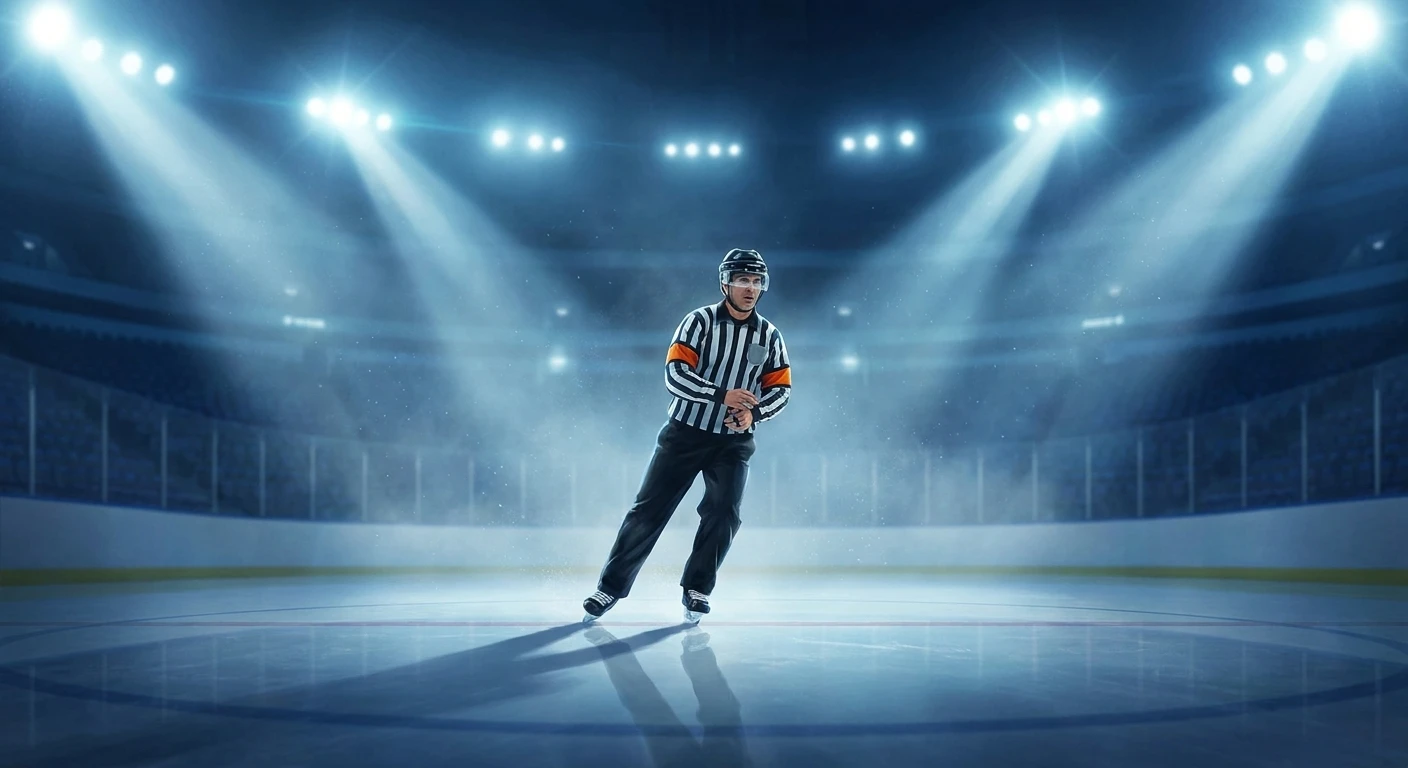
Everything You Need to Know About chris rooney on the Ice
If you follow the National Hockey League closely, you definitely know the name chris rooney. I remember a few winters ago, sitting in my apartment in Kyiv, Ukraine, wrapped in a blanket while the snow pounded against the windows. Because of the time difference, I was up at 3:00 AM watching a live feed of an intense rivalry game. The players were flying around, the crowd was absolutely deafening, and right in the middle of that chaos was a guy in stripes, calmly dictating the flow of the game. That level of composure completely blew my mind. Officiating at the highest professional level requires a mix of elite athleticism, split-second decision-making, and the communication skills of a hostage negotiator.
We rarely talk about the referees unless we are complaining about a missed call, but these guys are the literal heartbeat of the sport. Without their absolute precision, the game would devolve into sheer chaos. The year is 2026, and the speed of professional hockey has never been faster, making the job harder than ever before. Yet, veterans of the whistle continue to keep the peace and enforce the rulebook night after night. You really have to respect the physical and mental grind they endure. So, grab a coffee, pull up a chair, and let us talk about the fascinating world of professional hockey officiating through the lens of one of its most recognizable figures. I promise you will watch the next game with a totally different perspective.
The Core Impact: How Referees Shape the Game
A lot of fans underestimate what an official actually brings to the table. We see the goals, the big hits, and the incredible goalie saves, but we miss the subtle game management happening right in front of our eyes. A seasoned official does not just react to penalties; they actively prevent the game from spiraling out of control. Think about the sheer value of having a veteran presence on the ice. They set the standard early. If a game starts getting too chippy, a quick minor penalty sends a loud message to both benches that nonsense will not be tolerated.
Let us break down a quick statistical look at the incredible workload these professionals handle over a career:
| Career Phase | Games Officiated | Travel Demands |
|---|---|---|
| Early Years (AHL/Minors) | 300+ | Bus rides, minimal rest |
| Mid-Career (NHL Regular Season) | 1,000+ | Constant flights, high fatigue |
| Veteran Status (Playoffs) | 150+ | Extreme pressure, peak scrutiny |
To really grasp how they manage the environment, look at these specific examples of game control. First, when a scrum breaks out after a whistle, a top-tier referee uses vocal commands before jumping in physically, de-escalating the aggression using pure authority. Second, during a fast-paced odd-man rush, they have to perfectly anticipate the play, staying out of the passing lanes while keeping a perfect sightline on the puck. It is an intricate dance that requires immense hockey IQ.
Here are three direct ways an experienced official maintains absolute control over a volatile match:
- Proactive Communication: Constantly talking to the players and coaches during stoppages to explain calls and calm frustrations.
- Impeccable Positioning: Always finding the quiet areas of the ice to observe infractions without becoming an obstacle to the athletes.
- Consistent Standard: Establishing a baseline for what constitutes a penalty early in the first period and maintaining it until the final buzzer.
When you put all these elements together, you realize that the man in stripes is conducting a very violent, very fast symphony. Their physical stamina and mental toughness are completely off the charts, rivaling the athletes they are tasked with regulating.
Origins of a Career
Every great journey starts somewhere, and for top-level hockey officials, it usually begins in local, freezing-cold rinks. Born and raised in South Boston, the path to the major leagues was paved with early mornings and late nights. Southie is a neighborhood famous for its tough, blue-collar hockey culture. Growing up in that environment instills a certain grit. Before making it to the bright lights of the NHL arenas, aspiring refs spend years working youth games, collegiate levels, and the grueling minor leagues. They get yelled at by parents, questioned by amateur coaches, and learn how to grow thick skin incredibly fast. That foundational period is brutal, but it acts as a filter. Only the most dedicated and talented individuals survive the minor league grind to even get a sniff of a professional tryout contract.
Evolution of NHL Officiating
The job has changed massively over the decades. If you look back at the 1980s or 1990s, the game was heavily reliant on a one-referee system. That meant one person was responsible for calling every single penalty on a 200-foot ice surface. It was virtually impossible to see everything. The transition to the two-referee system fundamentally changed how the game is governed. Suddenly, officials could split the ice, allowing one to focus on the puck carrier while the other monitored the physical battles happening behind the play. This evolution cleaned up the sport immensely. The clutching, grabbing, and hidden slashes that defined older eras were slowly eradicated because an extra set of highly trained eyes was always watching.
Modern State of Refereeing
Right now, as we navigate through the 2026 season, officiating is completely high-tech. Officials are wearing microphones, communicating via headsets, and utilizing tablet reviews at the penalty boxes to ensure major calls are 100 percent accurate. The speed of the players has reached astronomical levels, meaning a referee has to be an elite skater just to keep up with the rush. They review their own game tapes just like the players do, dissecting their positioning, their sightlines, and their interactions with team captains. The modern state of the job demands perfection, constant learning, and an intense dedication to physical fitness.
The Biomechanics of Skating Backward
You cannot officiate at a world-class level if you cannot skate backward as fast as a professional athlete skates forward. This requires a fascinating breakdown of biomechanics. When a referee transitions from forward to backward skating, they are engaging their fast-twitch muscle fibers and utilizing the extreme edges of their skate blades to maintain balance. The center of gravity must remain perfectly stable while their head stays on a swivel. Unlike players who can coast or change lines every forty-five seconds, referees are on the ice for the entire game. They must conserve energy while remaining agile enough to dodge a 100 mile-per-hour slapshot. Their stride efficiency has to be flawless, relying on strong glutes, quadriceps, and an iron-clad core.
Cognitive Load on the Ice
The physical demands are wild, but the cognitive load is what truly separates the best from the rest. The brain of an official is processing an absurd amount of data every single second. They are watching the puck, tracking player sticks, monitoring the shot clock, and anticipating the trajectory of the play. Under immense adrenaline and a heart rate spiking near its maximum, they have to recall highly specific clauses in a massive rulebook.
- Visual Processing Speed: A top-tier official processes a potential infraction and makes a decision in under 0.2 seconds.
- Heart Rate Metrics: During a fast-paced period, a referee’s heart rate consistently hovers between 150 and 170 beats per minute.
- Caloric Output: An official can burn upwards of 1,500 calories during a single regulation hockey game.
- Peripheral Awareness: They must maintain an expanded field of vision, seeing up to 180 degrees to catch behind-the-play activity.
Day 1: Travel and Recovery
A week in the life of an elite NHL official is not a vacation. Day one usually involves waking up in a hotel room in one city and immediately heading to the airport to fly to another. Travel takes a massive toll on the body. Once they land, the primary focus is hydration and active recovery. They might spend an hour doing light stretching, yoga, or using pneumatic compression boots to flush the lactic acid out of their legs. Proper sleep hygiene is heavily prioritized to combat the brutal time zone changes.
Day 2: Morning Skate and Video Review
The morning of a game day starts at the arena. While the home and away teams are doing their morning skates, the officiating crew holds their own meetings. They review video clips from previous games, studying specific team tendencies. For example, if a team runs a highly aggressive power play, the crew discusses where they need to position themselves to avoid getting in the way of the puck. It is an intense study session designed to eliminate surprises later that evening.
Day 3: Game Day Preparation
As the puck drop approaches, the routine becomes sacred. A strict pre-game meal, usually lean proteins and complex carbohydrates, is consumed precisely four hours before the game. Arriving at the arena, the crew goes through a dynamic warm-up off the ice. They stretch, juggle to improve hand-eye coordination, and discuss their communication strategies. Once they step onto the ice, the focus narrows entirely. The noise of twenty thousand screaming fans fades into the background, and absolute concentration takes over.
Day 4: High-Intensity Interval Training
On a rare off-day between travel, the physical training does not stop. To maintain the cardio required to skate five miles a night, officials undergo High-Intensity Interval Training (HIIT). This involves short bursts of maximum effort on a stationary bike or a sprint track, followed by brief recovery periods. This mimics the stop-and-start nature of a hockey game, training their cardiovascular system to recover rapidly during the short television timeouts.
Day 5: On-Ice Positioning Drills
During the off-season or extended breaks, officials get back on the ice specifically to work on their craft. They run through complex positioning drills without a puck. They practice pivoting, sharp stops, and accelerating out of the corners. They also rehearse their sightlines, ensuring that they automatically move to the optimal viewing angle when a puck is jammed around the goalie’s crease. Repetition builds muscle memory, which is essential when the game moves at lightning speed.
Day 6: Rulebook Deep Dive
The NHL rulebook is a massive, highly detailed document that constantly receives updates and amendments. An official dedicates specific days entirely to studying the nuances of these rules. They run through hypothetical scenarios, memorize the subtle differences between a major and a match penalty, and ensure they are aligned with the league’s current directives. The league heavily tests their officials, and maintaining encyclopedic knowledge is a mandatory requirement for keeping their job.
Day 7: Mental Conditioning
The psychological toll of making a controversial call in a playoff game can be devastating if an official is not mentally prepared. Day seven is all about mental conditioning. They work with sports psychologists to develop techniques for compartmentalizing mistakes. If they blow a call in the first period, they cannot let it affect their judgment in the third period. Breathing exercises, visualization, and stoic philosophy are heavily utilized to build an impenetrable mental armor against the stress of public criticism.
Myths & Reality of NHL Officiating
Myth: Referees have favorite teams and actively try to influence the outcome of the game for certain franchises.
Reality: This is completely false. Officials are intensely monitored and graded by the league on every single call. Their continued employment and playoff assignments depend entirely on their neutrality and accuracy. They care about getting the call right, not who wins.
Myth: The officials just follow the puck around the ice like a fan would.
Reality: While one referee tracks the play near the puck, the other official is specifically tasked with watching everything else. They monitor the physical battles behind the play, line changes, and potential interference away from the puck carrier.
Myth: Anyone who is a decent skater can easily step in and be a hockey referee.
Reality: The physical exertion combined with the massive cognitive load makes it impossible for an average skater. It takes over a decade of intense, specialized training in the minor leagues to develop the specific instincts required to survive on NHL ice.
How many games has he worked?
Throughout a long and storied career, a veteran official like this easily surpasses the 1,000-game milestone, frequently pushing past 1,500 regular season games. It is a massive badge of honor that signifies incredible durability and consistency.
What number does he wear?
Top officials wear specific numbers on their backs, just like the players. It helps fans and the league identify them instantly on the ice and in the official record books. Number 5 is historically associated with his jersey.
Did he play hockey before?
Yes, almost all professional officials grew up playing the game. Having a background as a player provides the essential intuitive understanding of the sport, how players think, and how plays organically develop.
How much do NHL refs travel?
The travel schedule is punishing. They travel just as much as the teams do, if not more, zigzagging across North America for nine months out of the year, spending countless nights in hotels away from their families.
Does he work the Stanley Cup Finals?
Only the highest-graded officials are selected to work the Stanley Cup Finals. Earning a spot in the final round is the ultimate achievement for an official, proving they are currently the absolute best in the business.
What is his physical training like?
The regimen is incredibly strict, blending heavy cardiovascular endurance training, core stability workouts, and intense leg strength conditioning to handle the constant, grueling physical demands of professional skating.
How do refs deal with angry players?
They utilize strict verbal de-escalation tactics, immense patience, and firm boundaries. They allow players to vent momentarily but quickly shut down any disrespectful language or actions with penalty enforcement.
Final Thoughts
The amount of respect we owe to these professionals is massive. From the gruff origins in local rinks to officiating on the biggest stages in the world, the journey of an NHL referee is filled with sacrifice, intense physical training, and unparalleled mental toughness. They take the verbal abuse, they endure the travel, and they keep the greatest sport on earth functioning perfectly. Next time you are watching a game, take a few minutes to just watch the referee navigate the ice. You will see true mastery at work. If you loved this deep dive into the stripes, be sure to share this breakdown with your fellow hockey fans and keep the conversation going!