

Why sam mckee is the Voice You Need to Hear Right Now
Hey there. If you are searching for the real story behind sam mckee, you came to the absolute right place. I am writing this to you directly because I know how cluttered the internet is right now, especially when you are looking for authentic sports media personalities. Back home in Ukraine, I often sit at a bustling local café near the Dnipro river, streaming hockey highlights on my phone while the local patrons argue passionately about European soccer. We value pure, unscripted emotion in our sports debates. We despise fake, plastic commentary. That exact demand for genuine emotion is exactly why we need to talk about this broadcaster today.
The sports media landscape has shifted dramatically, and as we push through 2026, fans are demanding way more than just someone reading a box score. You want a host who feels the crushing defeats and the exhilarating victories exactly the same way you do. You want someone who texts their friends angry rants after a blown lead. That is the exact vibe we are dealing with here. Grab your favorite drink, pull up a chair, and let me walk you through exactly why his approach to sports talk is resonating so deeply with listeners across the globe.
The Core Mechanics of Authentic Broadcasting
So, what exactly sets a top-tier sports media personality apart from the rest of the pack? It basically comes down to three massive pillars: relatability, pacing, and sheer unadulterated passion. When you tune into a show featuring sam mckee, you are not getting a sterilized, corporate-approved script. You are getting the raw, unfiltered fan experience, channeled through a professional microphone.
Think about the traditional sports broadcast for a second. It is usually a guy in a suit, staring dead-eyed into a camera, reciting statistics that you could have easily Googled yourself. It feels cold. It feels disconnected. Now compare that to the modern fan-first approach. The modern approach sounds like you are sitting at a bar with your smartest sports buddy. They know the stats, sure, but they care way more about the momentum, the bad coaching decisions, and the emotional weight of the game.
Here is exactly how the traditional model stacks up against the modern, authentic style we are seeing dominate the airwaves today:
| Broadcasting Aspect | Traditional Media Style | The Modern Authentic Style |
|---|---|---|
| Tone & Delivery | Scripted, monotone, completely objective. | Highly emotional, conversational, purely subjective. |
| Fan Interaction | One-way street. Very little listener input. | Dynamic. Heavy reliance on social media and call-ins. |
| Analysis Depth | Surface level stats and basic game recaps. | Deep psychological analysis of player performance and fan misery. |
If you really want to appreciate good sports talk, you have to actively listen for specific things. Here are three major ways to truly absorb a top-tier sports broadcast:
- Listen for the silence: The best broadcasters know exactly when to shut up. They let the audio of the crowd or the sheer weight of a bad loss hang in the air before they speak.
- Track the narrative threads: Good hosts do not just talk about last night. They connect last night’s terrible penalty kill to a recurring problem the team has had for three entire seasons.
- Watch for the humor pivot: Being angry about sports gets exhausting. The elite voices know how to pivot from a furious rant into a hilarious, self-deprecating joke about caring too much about millionaires chasing a puck.
The Early Origins
Every great voice starts somewhere entirely unremarkable. You do not just wake up, sit behind a massive mixing board, and suddenly command an audience of thousands of frustrated hockey fans. The origins of any gritty sports media career usually involve grinding through terrible graveyard shifts. We are talking about 2:00 AM radio slots where the only callers are insomniacs and truck drivers. You learn how to hold a conversation when nobody else is in the room. You learn how to manufacture energy when your body is begging for sleep. This crucible is exactly what forged the conversational, highly adaptable style that makes modern hosts so compelling.
The Evolution of a Broadcaster
As time goes on, the training wheels come off. The evolution from a late-night producer or minor host into a main-event personality requires a massive leap of faith. You have to start injecting your actual personality into the takes. If you try to fake it, the audience will absolutely sniff it out and ruin you on social media. The evolution requires finding chemistry with co-hosts, learning how to pass the conversational ball, and figuring out how to completely disagree with someone on air without making it intensely awkward for the listener. It is a delicate, high-wire act.
The Modern State of Sports Talk
Right now, in 2026, the modern state of sports talk is completely decentralized. Terrestrial radio still exists, sure, but the real battleground is podcasting, live YouTube streams, and bite-sized social media clips. To survive today, a broadcaster must be instantly engaging within the first three seconds of a clip. They need to provide a take that is hot enough to share, but grounded enough in reality to not sound like a desperate troll. The modern broadcaster is basically part journalist, part stand-up comedian, and part group therapist for traumatized sports fans.
The Audio Architecture
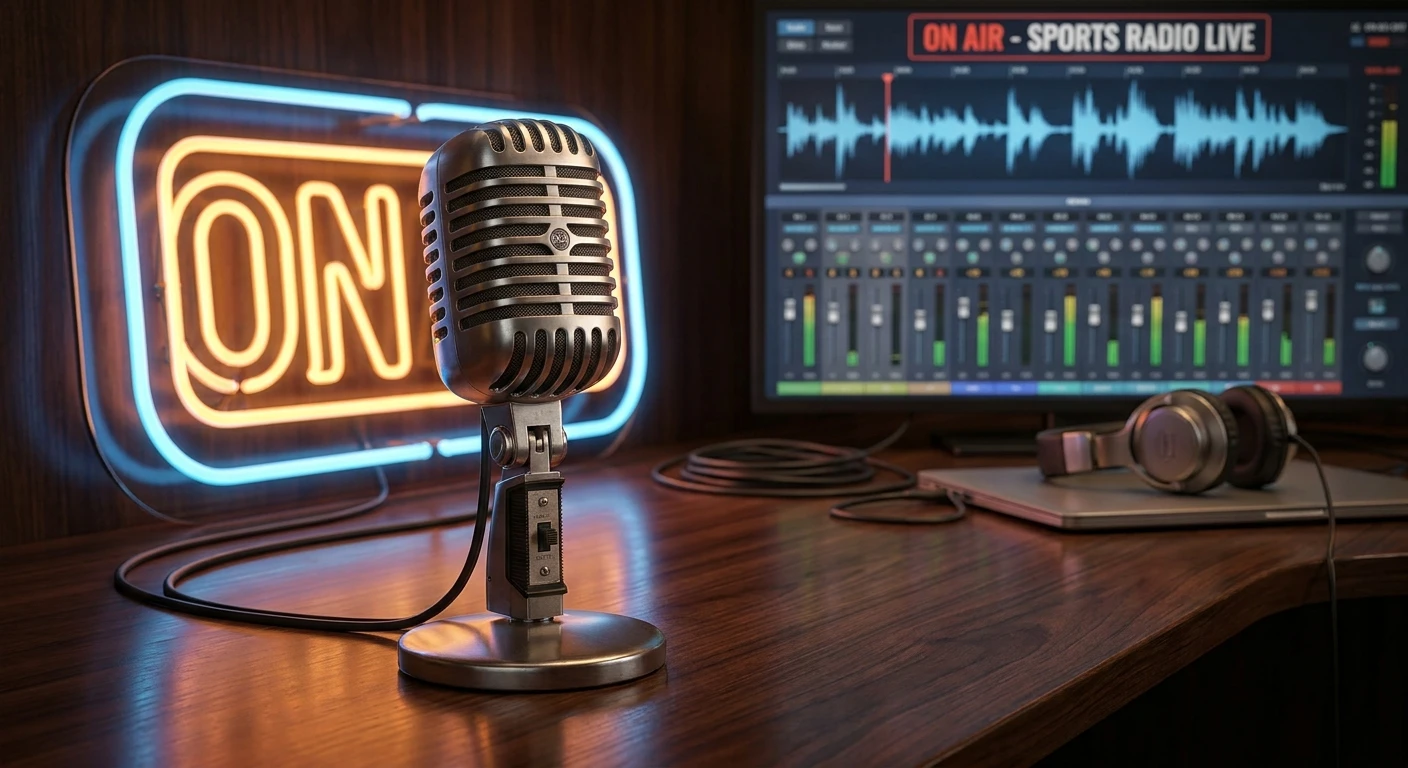
Let me geek out with you for a second because the technical side of broadcasting is wildly fascinating and totally misunderstood. When you hear that rich, booming voice on a podcast or radio show, you are actually listening to highly manipulated sound waves designed specifically to keep your brain engaged. The audio architecture of a modern studio relies heavily on dynamic range compression. This means that when a host whispers in despair, the microphone boosts the volume, and when they scream in triumph, the compressor squashes the audio so it does not blow out your car speakers. It creates an incredibly intimate listening environment.
Broadcasting Frequencies and Digital Compression
The human voice is a biological instrument, and translating it into ones and zeros requires serious math. The analog sound wave hits the diaphragm of a high-end dynamic microphone, converting acoustic energy into an electrical signal. This signal is aggressively scrubbed for background noise. It is actually a brutal process for the raw audio.
- Sample Rate: Most high-end voice audio is captured at 48kHz, meaning the computer is taking 48,000 snapshots of the voice every single second.
- Bit Depth: Operating at 24-bit depth gives the broadcaster massive headroom, allowing for sudden outbursts without digital clipping.
- Proximity Effect: When a host leans incredibly close to a directional microphone, it artificially boosts the low-frequency bass of their voice, making them sound far more authoritative.
- Vocal Fatigue: Screaming about a blown third-period lead actually inflames the vocal folds. Professional hosts drink warm tea and avoid dairy before shows to keep their pharynx clear.
Day 1: The Cold Open Evaluation
I want you to try an experiment. Tomorrow, when you tune into your favorite sports show, pay strict attention to the very first 60 seconds. This is the cold open. Do they hit you with stats, or do they hit you with a pure emotional statement? Write down exactly how their opening tone makes you feel.
Day 2: Mid-Game Rants
Find a clip of a host reacting live to a terrible play. Your goal today is to study the pacing. Notice how they breathe. The best rants are not just screaming; they are rhythmic. They build up tension and release it exactly like a good piece of music.
Day 3: The Co-Host Dynamic
Spend today analyzing the chemistry between a host and their partner. Listen for the interruptions. Are they stepping on each other’s toes, or are they playing jazz? Good broadcasting requires insane levels of unspoken communication, usually just eye contact across a studio desk.
Day 4: Call Screening Reality
Today is all about the callers. Listen to how a host handles a caller who has a completely terrible take. Do they mock them mercilessly, or do they gently guide them into a trap? Handling the public live on air is an extreme sport on its own.
Day 5: The Sponsor Pivot
This sounds boring, but it is actually an art form. Pay attention to how the host transitions from talking about a devastating injury to reading a live ad for a local car dealership or a sports betting app. The mental gymnastics required to make this sound natural is staggering.
Day 6: Post-Game Depression
Focus entirely on a post-game show after a humiliating loss. Notice the somber, funereal tone. The host is literally doing grief counseling for the city. They have to validate the anger of the fans while keeping the show moving forward.
Day 7: The Victory Lap
Finally, listen to a show after a massive playoff win. The energy should be electric, chaotic, and totally unhinged. Your entire week of active listening culminates here. You will finally hear the full spectrum of a sports media personality’s emotional range.
Myths & Reality in Sports Broadcasting
There is so much garbage information out there about what sports broadcasters actually do. Let me clear up some massive misconceptions right now.
Myth: They just show up five minutes before air and start talking.
Reality: The prep work is absolutely brutal. Hosts spend hours reading box scores, watching awful games they do not care about, and writing out detailed outlines just so the conversation sounds completely spontaneous.
Myth: The on-air anger is totally faked for ratings.
Reality: While they might turn the volume up 10%, the frustration is usually deeply real. You cannot fake that level of annoyance for three hours a day, five days a week, without having a mental breakdown. They actually care.
Myth: Anyone with a microphone and a sports opinion can do this job.
Reality: Having a loud opinion is only 5% of the gig. The other 95% is audio engineering, pacing, managing live ad reads, reading social media algorithms, and not dead-airing when a guest suddenly drops off the line.
What makes a sports host actually relatable?
It all comes down to shared misery. If they suffer through the exact same terrible team performances that you do, and express that suffering openly, you instantly bond with them. Vulnerability is key.
How much prep goes into a daily show?
Usually about two to three hours of hard prep for every single hour of live broadcasting. They are scanning Twitter, reading beat writers, and clipping audio constantly.
Do broadcasters actually hate the players they criticize?
Almost never. It is strictly business. They are criticizing the performance, not the human being. The best hosts draw a very hard line between personal attacks and professional critiques.
Why are podcasts taking over traditional radio?
Because you can swear, you do not have to hit strict commercial breaks every twelve minutes, and you can listen to it exactly when you want. On-demand audio fits our modern schedules way better.
Is the equipment really that expensive?
Yes and no. You can start a show with a fifty-dollar mic, but the massive studio setups you see on YouTube streams cost tens of thousands of dollars to sound that crisp and isolated.
How do you deal with terrible callers?
A heavy hand on the ‘dump’ button and a really sharp sense of humor. You have to take control of the conversation immediately or the caller will hijack the entire segment.
What is the hardest sport to talk about daily?
Baseball. It is a 162-game season. Finding a brand new, engaging angle to talk about a random Tuesday game in mid-August requires superhuman levels of creativity.
Summary and Next Steps
Look, the next time you put your headphones on and hear sam mckee or any other top-tier broadcaster, I want you to remember everything we just talked about. You are not just listening to some guy rant about sports. You are listening to a highly tuned audio production, driven by immense prep work, psychological pacing, and a genuine, bleeding-heart love for the game. I highly recommend you start actively analyzing your favorite shows using the 7-day plan I laid out above. If you loved this deep breakdown, go ahead and share this with your favorite sports buddy right now so they can finally understand what makes great radio actually work!